
Garden10
Estimated reading time: 0 minutes, 0 seconds
Subscribe to Sharing Jan's Love Newsletter!
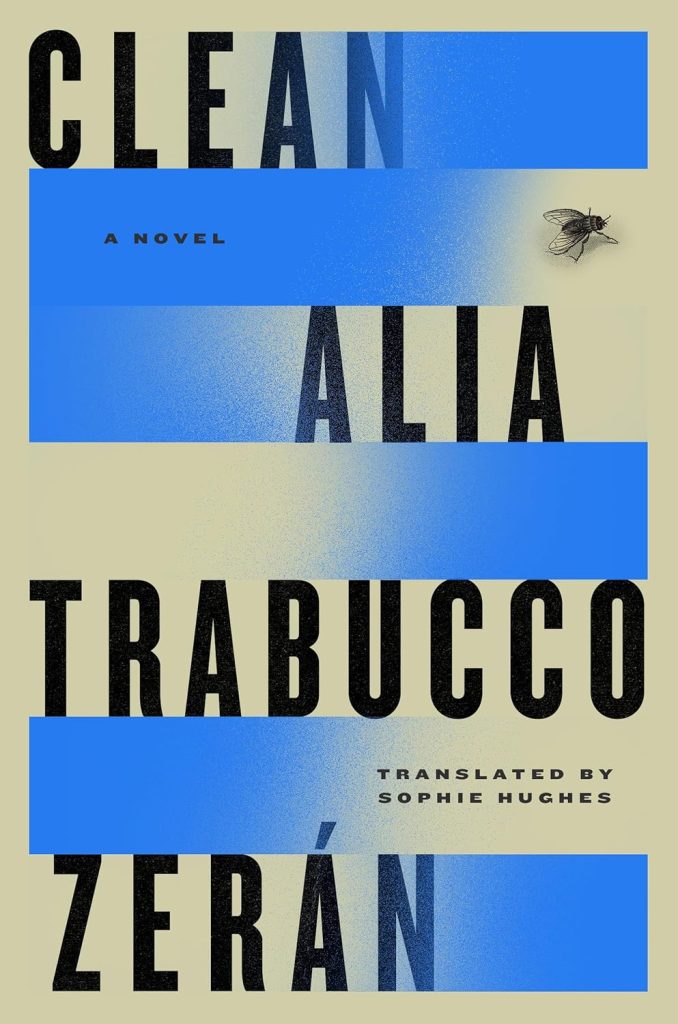
by Alia Trabucco Zerán
Today, I delved into the unique narrative of ‘Clean: A Novel‘ by Alia Trabucco Zerán, translated by Sophie Hughes. This compelling novel, shortlisted for the Femina Etranger and Medicis Etranger Prizes, unfolds the story of a maid who has witnessed a lot and a family on the brink of collapse. The narrative is centered around a young girl’s death, with the family’s maid being the critical witness under interrogation, tasked with recounting the events leading up to the tragedy.
Estela’s journey from the countryside, leaving her mother behind, to work for the señor and señora when their only child was born is poignant. Their ad for a housemaid: ‘Smart appearance, full-time,’ was her ticket to earning enough to support her mother and return home. Estela cleaned their laundry, wiped their floors, and made their meals for seven years, but she also became privy to their secrets, witnessed their conflicts, and raised their daughter. She heard the rats in the ceiling, saw the looks the señor gave the señora, and knew about the poison in the cabinet, the gun, the daughter’s rebellion, the mother’s coldness, and the father’s distance. She experienced it all.
After a series of shocking betrayals and revelations, Estela’s silence becomes her shield, broken only now to reveal how it all unraveled. Is this a tale of vengeance or a confession? A clash of classes or a lesson in caution? With each page turn, ‘Clean: A Novel‘ builds tension, offering a gripping, incisive exploration of power, domesticity, and betrayal from an international star at the peak of her storytelling prowess.
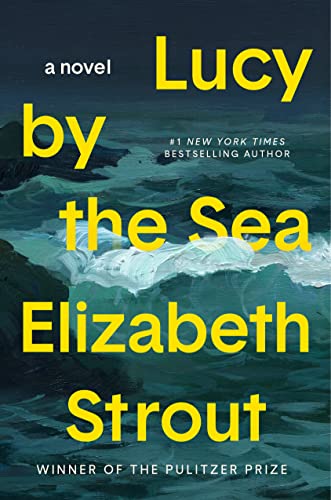
by Elizabeth Strout
Lucy by the Sea: A Novel by Elizabeth Strout is a poignant, pitch-perfect novel about a divorced couple stuck together during lockdown–and the love, loss, despair, and hope that animate us even as the world seems to be falling apart. Having lost Jan during Covid, I was apprehensive about reading this book. However, it was not only a page-turner but also a novel that gave me a new perspective on loss which helped me manage my grief.
With her trademark spare, crystalline prose, Elizabeth Strout turns her exquisitely tuned eye to the inner workings of the human heart, following the indomitable heroine of My Name Is Lucy Barton through the early days of the pandemic.
I highlighted several passages that specifically spoke to me.
We all live with people—and places—and things—that we have given great weight to. But we are weightless, in the end.
Who knows why people are different? We are born with a certain nature, I think. And then the world takes its swings at us.
It has been said that the second year of widowhood is worse than the first—the idea being, I think, that the shock has worn off and now one has to live with the loss, and I had been finding that to be true, even before I came to Maine with William. But now there were times I felt that I was just learning of David’s death again for the first time. And I would be privately staggered by grief. And to be in this place where David had never been (!)—I was really dislocated is what I mean.
And I also understood: Grief is a private thing. God, is it a private thing.
We are all in lockdown, all the time. We just don’t know it, that’s all. But we do the best we can. Most of us are just trying to get through.
The Goodreads summary provides an overview,
As a panicked world goes into lockdown, Lucy Barton is uprooted from her life in Manhattan and bundled away to a small town in Maine by her ex-husband and on-again, off-again friend, William. For the next several months, it’s just Lucy, William, and their complex past together in a little house nestled against the moody, swirling sea.
Rich with empathy and emotion, Lucy by the Sea vividly captures the fear and struggles that come with isolation, as well as the hope, peace, and possibilities that those long, quiet days can inspire. At the heart of this story are the deep human connections that unite us even when we’re apart–the pain of a beloved daughter’s suffering, the emptiness that comes from the death of a loved one, the promise of a new friendship, and the comfort of an old, enduring love.
The Jan Lilien Education Fund sponsors ongoing sustainability and environmental awareness programs. Gifts made this month; I will match dollar-for-dollar. All donations are tax-deductible.
I receive a commission when you buy a book or product using a link on this page. Thank you for supporting Sharing Jan’s Love blog.
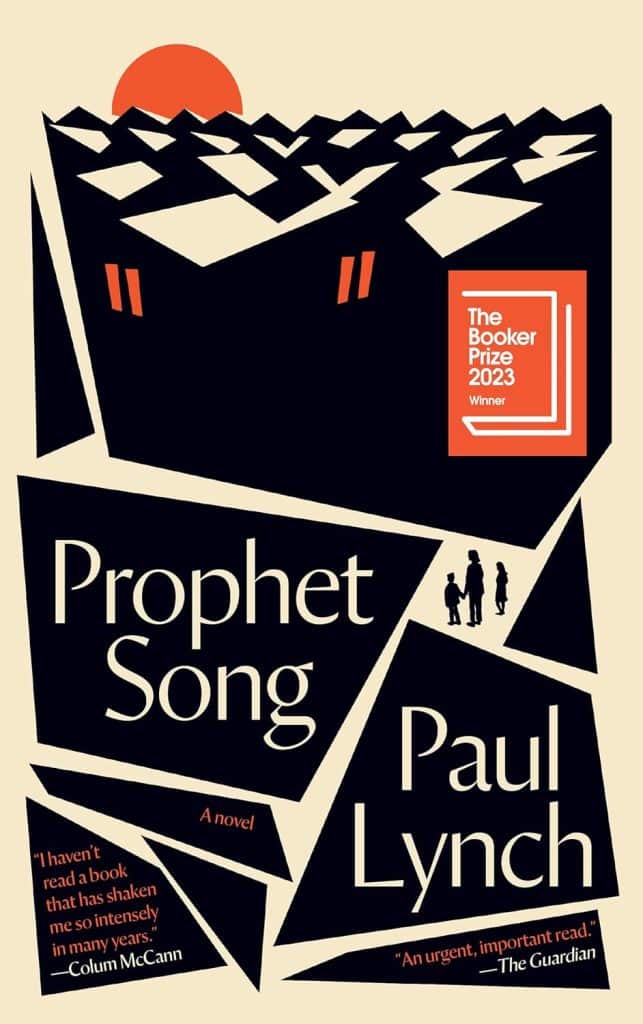
by Paul Lynch
In 2024, I started my reading journey with the Booker Prize 2023 winner – Prophet Song, by Paul Lynch. The book presents a chilling and astonishing outlook of a nation sliding into authoritarianism while also painting a profoundly humane portrait of a mother’s struggle to keep her family together. I have not set a goal of the number of books to read in 2024, but this is an excellent first-day pageturner.
It all begins on a dark, rainy evening in Dublin when Eilish Stack, a scientist and mother of four, opens her front door to two officers from Ireland’s newly formed secret police. They are there to interrogate her husband, a trade unionist. Ireland is falling apart as the government is gradually turning towards tyranny. As her world crumbles and the people she loves disappear, Eilish faces the dystopian reality of her country. How far is Eilish willing to go to protect her family? And what, or who, is she ready to leave behind?
The Jan Lilien Education Fund sponsors ongoing sustainability and environmental awareness programs. Gifts made this month; I will match dollar-for-dollar. All donations are tax-deductible.
I receive a commission when you buy a book or product using a link on this page. Thank you for supporting Sharing Jan’s Love blog.
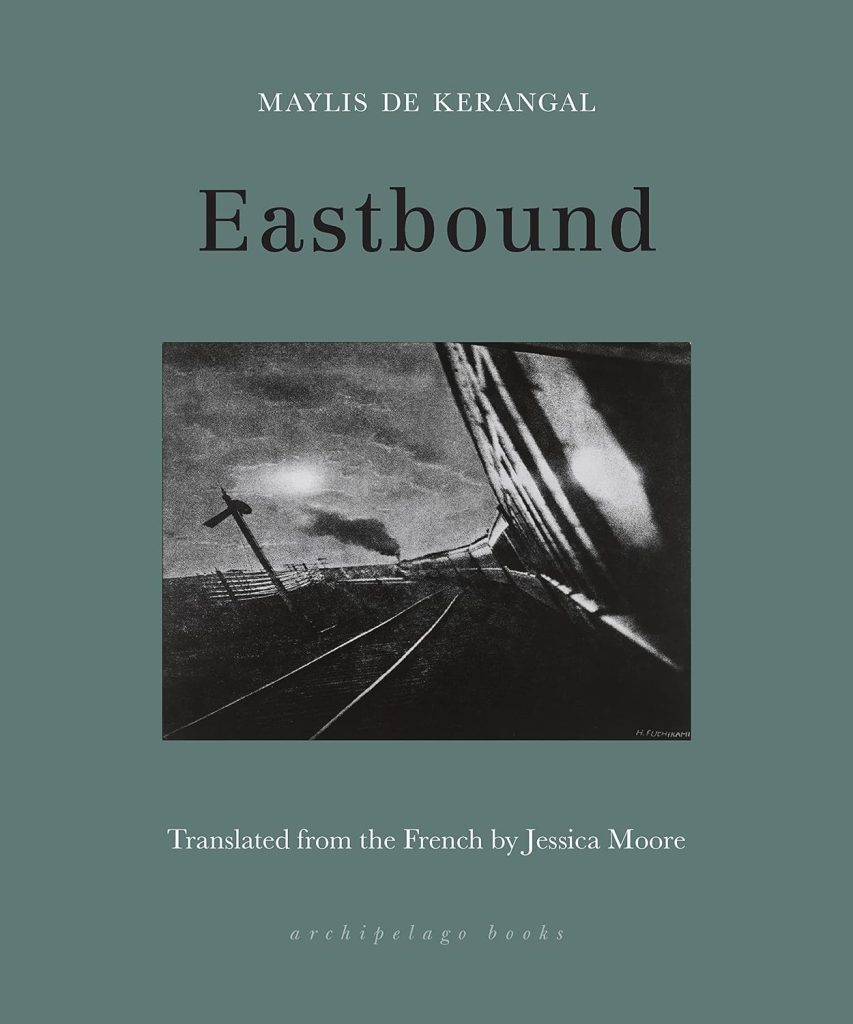
by Maylis De Kerangal
Today, I would like to recommend the book “Eastbound” by Maylis De Kerangal, which has been beautifully translated into English by Jessica Moore. The story revolves around a Russian conscript and a French woman who cross paths on the Trans-Siberian railroad, each trying to escape to the East for different reasons. “Eastbound” is an adventure story that takes you through two vibrant inner worlds.
The book has been listed as one of the five best fiction books 2023 by The New York Times. Maylis De Kerangal has done an excellent job telling the story of two unlikely souls with gorgeously translated, winding sentences that evoke a striking sense of tenderness. The brutality of the surrounding world contrasts sharply with the growing collaboration between the two characters.
As the story progresses, we meet Aliocha, a young Russian conscript who decides to desert the train soon after boarding the Trans-Siberian train with other Russian conscripts. During a midnight smoke in a dark corridor of the train, Aliocha encounters an older French woman, Hélène, for whom he feels an uncanny trust. He urgently asks Hélène, through pantomime and basic Russian, for her help hiding him. They hurry from the filth of his third-class carriage to Hélène’s first-class sleeping car. As Aliocha becomes a hunted deserter, Hélène becomes his accomplice, having her inner landscape of recent memories to contend with.
The Jan Lilien Education Fund sponsors ongoing sustainability and environmental awareness programs. Gifts made this month; I will match dollar-for-dollar. All donations are tax-deductible.
I receive a commission when you buy a book or product using a link on this page. Thank you for supporting Sharing Jan’s Love blog.
by Jung Yun
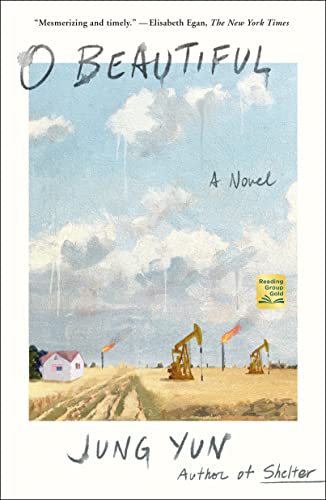
O Beautiful: A Novel by Jung Yun, the critically acclaimed author of Shelter, has written an unflinching portrayal of a woman trying to come to terms with the ghosts of her past and the tortured realities of a deeply divided America. With spare and graceful prose, O Beautiful presents an immersive portrait of a community rife with tensions, competing interests, and one woman’s attempts to reconcile her anger with her love of beautiful but troubled land. I highly recommend O Beautiful!
I finished reading O Beautiful on International Women’s Day. It might have been coincidental, but in my humble opinion, it was the perfect book to read on this important day. Ms. Yun has written a novel that touches on the intersectionality of the core issues of our divided land. The misogyny, the racism, and the impact of capitalism out of control are all related and are affecting the quality of life in the early twenty-first century.
Elinor Hanson, the protagonist, is so vividly written that she jumps off the page and becomes someone we know as a family member. When she returned home to write about the Bakken oil boom in North Dakota, I felt I had known her all my life. Unfortunately, the novel ended when she finally understood the issues and was in touch with her anger. I wish it would have continued so that the problems might have been addressed. Despite this, I highly recommend this novel.
O Beautiful is the twenty-first book I have read this year! My goal was twenty-three.
The Goodreads summary provides an overview,
Elinor Hanson, a forty-something former model, struggles to reinvent herself as a freelance writer when she receives an unexpected assignment. Her mentor from grad school offers her a chance to write for a prestigious magazine about the Bakken oil boom in North Dakota.
Elinor grew up near the Bakken, raised by an overbearing father and a distant Korean mother who met and married when he was stationed overseas. After decades from home, Elinor returns to a landscape she hardly recognizes, overrun by tens of thousands of newcomers.
Surrounded by roughnecks seeking their fortunes in oil and long-time residents worried about their changing community, Elinor experiences a profound sense of alienation and grief. She rages at the unrelenting male gaze, the locals who still see her as a foreigner, and the memories of her family’s estrangement after her mother decided to escape her unhappy marriage, leaving Elinor and her sister behind.
The longer she pursues this potentially career-altering assignment, the more her past intertwines with the story she’s trying to tell, revealing disturbing new realities that will forever change her and how she looks at the world.
The Jan Lilien Education Fund sponsors ongoing sustainability and environmental awareness programs. Gifts made this month; I will match dollar-for-dollar. All donations are tax-deductible.
I receive a commission when you buy a book or product using a link on this page. Thank you for supporting Sharing Jan’s Love blog.
by C Pam Zhang
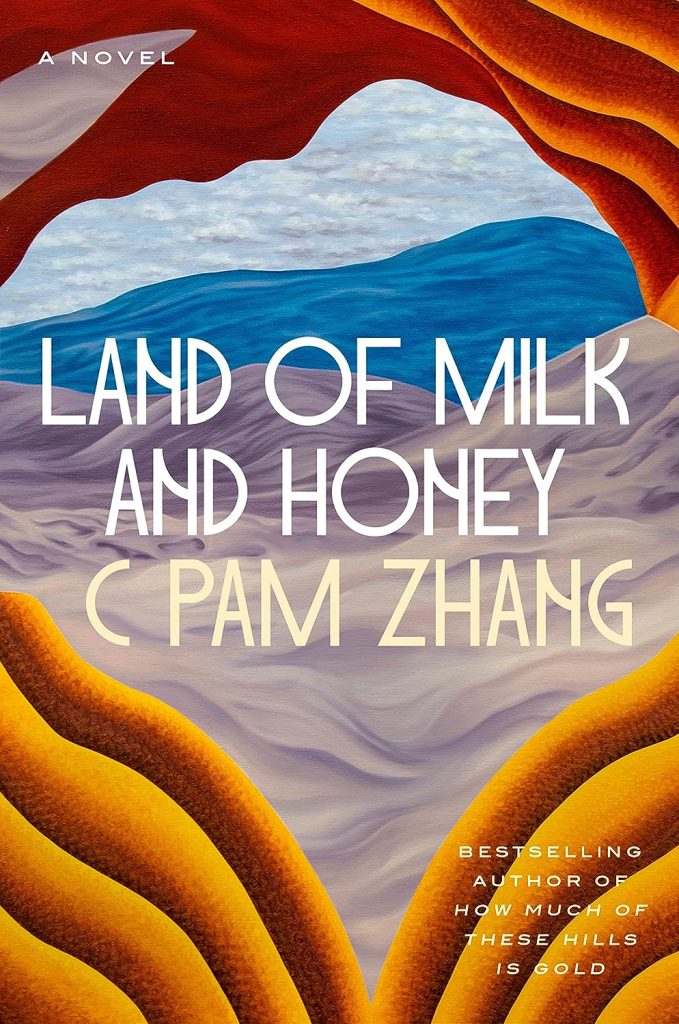
Today, I commenced reading Land of Milk and Honey: A Novel by C Pam Zhang, the award-winning author of How Much of These Hills Is Gold; she returns with a rapturous and revelatory novel about a young chef whose discovery of pleasure alters her life and, indirectly, the world. With the arrival of forest fire smoke in my neighborhood, it seemed a timely book to read.
A smog has spread. Food crops are rapidly disappearing. A chef escapes her dying career in a dreary city to take a job at a decadent mountaintop colony seemingly free of the world’s troubles.
There, the sky is clear again. Rare ingredients abound. Her enigmatic employer and his visionary daughter have built a lush new life for the global eliteZhan, one that reawakens the chef to the pleasures of taste, touch, and her body.
The chef’s boundaries undergo a thrilling erosion in this atmosphere of hidden wonders and cool, seductive violence. Soon, she is pushed to the center of a startling attempt to reshape the world far beyond the plate.
Sensuous and surprising, joyous and bitingly sharp, told in language as alluring as it is original, Land of Milk and Honey provocatively bare the ethics of seeking pleasure in a dying world. It is a daringly imaginative exploration of desire and deception, privilege and faith, and the roles we play to survive. Most of all, it is a love letter to food, wild delight, and the transformative power of a woman embracing her own appetite.
The Jan Lilien Education Fund sponsors ongoing sustainability and environmental awareness programs. Gifts made this month; I will match dollar-for-dollar. All donations are tax-deductible.
I receive a commission when you buy a book or product using a link on this page. Thank you for supporting Sharing Jan’s Love blog.