
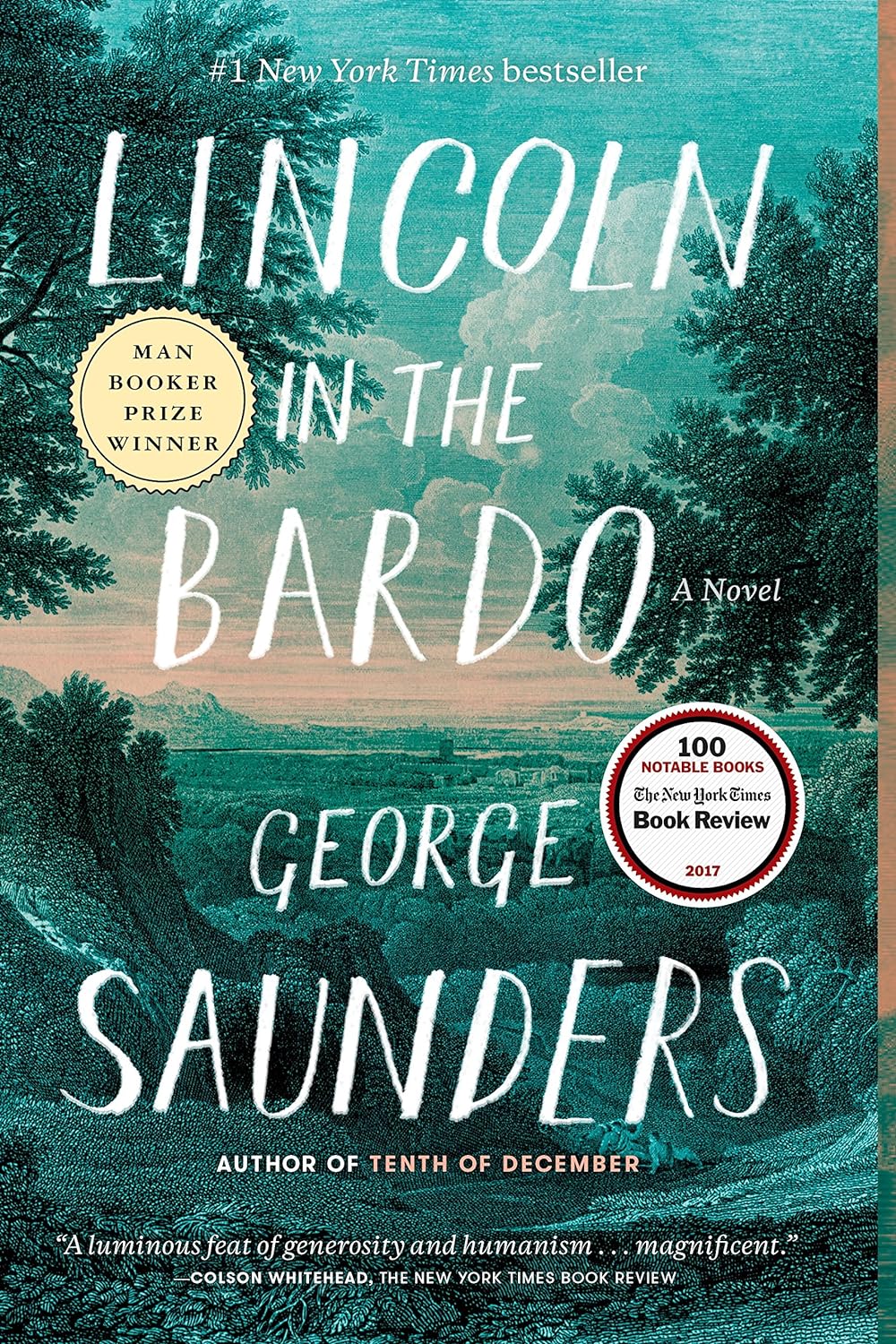
Lincoln in the Bardo: A Novel

Estimated reading time: 2 minutes, 51 seconds

My journey with “Lincoln in the Bardo: A Novel” by George Saunders began with recognition as one of The New York Times’ 100 Best Books of the Century. As I turned its pages, I was immersed in its profound exploration of living and loving in the face of inevitable endings. The book, which struck a personal chord with me after a loss, is a testament to Saunders’ storytelling prowess and a must-read for those interested in Abraham Lincoln.

February 1862. The Civil War is less than one year old. The fighting has begun in earnest, and the nation has already realized it is in for a long, bloody struggle. Meanwhile, President Lincoln’s beloved eleven-year-old son, Willie, lies upstairs in the White House, gravely ill. In a matter of days, despite predictions of a recovery, Willie dies and is laid to rest in a Georgetown cemetery. “My poor boy, he was too good for this earth,” the president says at the time. “God has called him home.” Newspapers report that a grief-stricken Lincoln returns, alone, to the crypt several times to hold his boy’s body.

From a seed of historical truth, George Saunders weaves an unforgettable tale of familial love and loss that transcends its realistic, historical framework. The story takes a daring leap into a realm that is hilarious and terrifyingly supernatural. Willie Lincoln’s journey in a strange purgatory, where ghosts mingle, gripe, commiserate, quarrel, and enact bizarre acts of penance, is a testament to Saunders’ imaginative prowess. The monumental struggle over young Willie’s soul in this transitional state, known as the bardo in the Tibetan tradition, is a narrative that will leave you spellbound.

Lincoln in the Bardo is an astonishing feat of imagination and a bold step forward from one of his generation’s most important and influential writers. Formally daring, generous in spirit, and deeply concerned with matters of the heart, it is a testament to fiction’s ability to speak honestly and powerfully about the things that matter to us. Saunders has invented a thrilling new form that deploys a kaleidoscopic, theatrical panorama of voices to ask a timeless, profound question: How do we live and love when we know everything we love must end?


George Saunders is the author of thirteen books, including the novel Lincoln in the Bardo, which won the Booker Prize, and five collections of stories, including Tenth of December, which was a finalist for the National Book Award, and the recent collection Liberation Day (selected by former President Obama as one of his ten favorite books of 2022).

Three of Saunders’s books—Pastoralia, Tenth of December, and Lincoln in the Bardo—were chosen for The New York Times’s list of the 100 Best Books of the 21st Century. Saunders hosts the popular Story Club on Substack, which grew out of his book, A Swim in a Pond in the Rain. In 2013, he was named one of Time’s 100 Most Influential People. He teaches in the creative writing program at Syracuse University.


Discover your next favorite book and dive into a world of curated, exciting reads by purchasing through my links. You’ll have access to a diverse selection of books that I’ve personally vetted to ensure quality and enjoyment. Additionally, by supporting these selections, you’ll help me continue to provide you with more personalized recommendations. I earn a small commission from your purchase, which allows me to buy and share even more books with you. Your support truly makes a difference!


The Jan Lilien Education Fund!

All Fours: A Novel

Read: May 2024

Get this book

All Fours: A Novel

by Miranda July

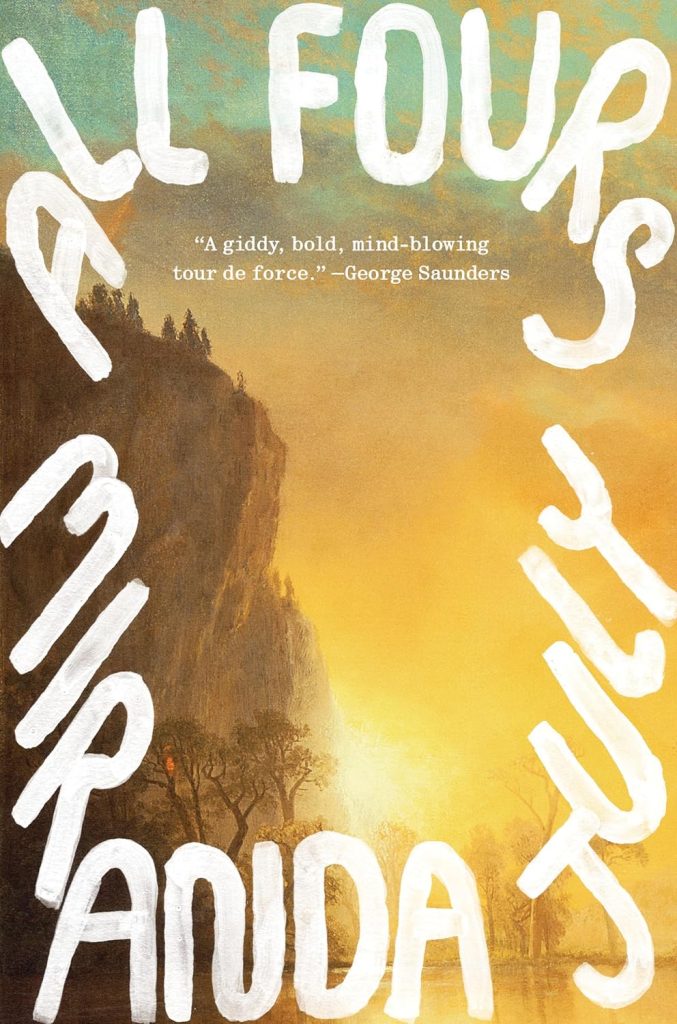
Today, I started reading All Fours: A Novel by Miranda July. A semi-famous artist announces her plan to drive cross-country from LA to NY. Thirty minutes after leaving her husband and child at home, she spontaneously exits the freeway, checks into a nondescript motel, and immerses herself in an entirely different journey.

Miranda July’s second novel, a testament to her unique approach to fiction, confirms the brilliance of her storytelling. With July’s wry voice, perfect comic timing, unabashed curiosity about human intimacy, and palpable delight in pushing boundaries, All Fours tells the story of one woman’s quest for a new kind of freedom. Part absurd entertainment, part tender reinvention of the sexual, romantic, and domestic life of a forty-five-year-old female artist, All Fours transcends expectation while excavating our beliefs about life as a woman. Once again, July hijacks the familiar and turns it into something new and thrillingly, profoundly alive.


When you purchase a book through one of my links, I earn a small commission that helps support my passion for reading. This contribution allows me to buy even more books to share with you, creating an incredible cycle of discovering great reads together! Your support truly makes a difference!


×
Sarah's Key

Read: January 2022

Get this book

Sarah’s Key

by Tatiana de Rosnay

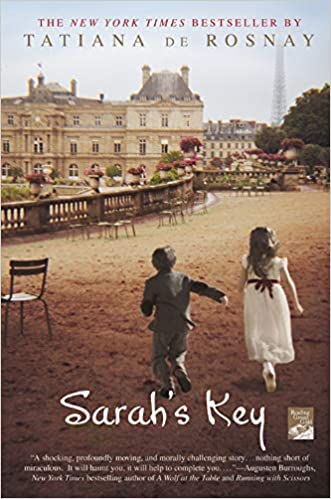
Sarah’s Key by Tatiana de Rosnay is the untold story of the roundup of the Jews in Paris in July 1942. The novel focuses on how the French were complicit in rounding up thousands of Jews in 1942. It is also a reminder that we can never allow another genocide. I finished this book the day before Holocaust Remembrance Day, January 27, the date on which the Auschwitz-Birkenau concentration and death camp complex was liberated in 1945.

Ten-year-old Sarah is brutally arrested with her family in the Vel’ d’Hiv’ roundup, the most notorious act of French collaboration with the Nazis. But before the police come to take them, Sarah locks her younger brother, Michel, in their favorite hiding place, a cupboard in the family’s apartment. She keeps the key, thinking she will be back within a few hours.

Paris, May 2002: On Vel’ d’Hiv’s sixtieth anniversary, Julia Jarmond, an American journalist, is asked by her Paris-based American magazine to write an article about this black day in France’s past. Julia has lived in Paris for nearly twenty-five years and married a Frenchman, and she is shocked both by her ignorance about the event and the silence that still surrounds it.

The twin narratives of Sarah and Julia hold the first two-thirds of the book together and make it a page-turner. Sarah’s memory reminds us during the final third of the book and ensures that the complete story of the Vel’ d’Hiv’ roundup and its lasting impact are told.

As Goodreads describes the novel,

In the course of her investigation, she stumbles onto a trail of long-hidden family secrets that connects her to Sarah. Julia finds herself compelled to retrace the girl’s ordeal, from the terrible days spent shut in at the Vel’ d’Hiv’ to the camps and beyond. As she probes into Sarah’s past, she begins to question her own place in France and to reevaluate her marriage and her life.

Writing about the fate of her country with a pitiless clarity, Tatiana de Rosnay offers us a brilliantly subtle, compelling portrait of France under occupation and reveals the taboos and denial surrounding this painful episode in French history.

I highly recommend the book.

Subscribe

Contact Us

When you buy a book or product using a link on this page, I receive a commission. Thank you for supporting Sharing Jan’s Love blog.

×
This Is Where the Serpent Lives

Read: January 2026

Get this book

This Is Where the Serpent Lives

by Daniyal Mueenuddin

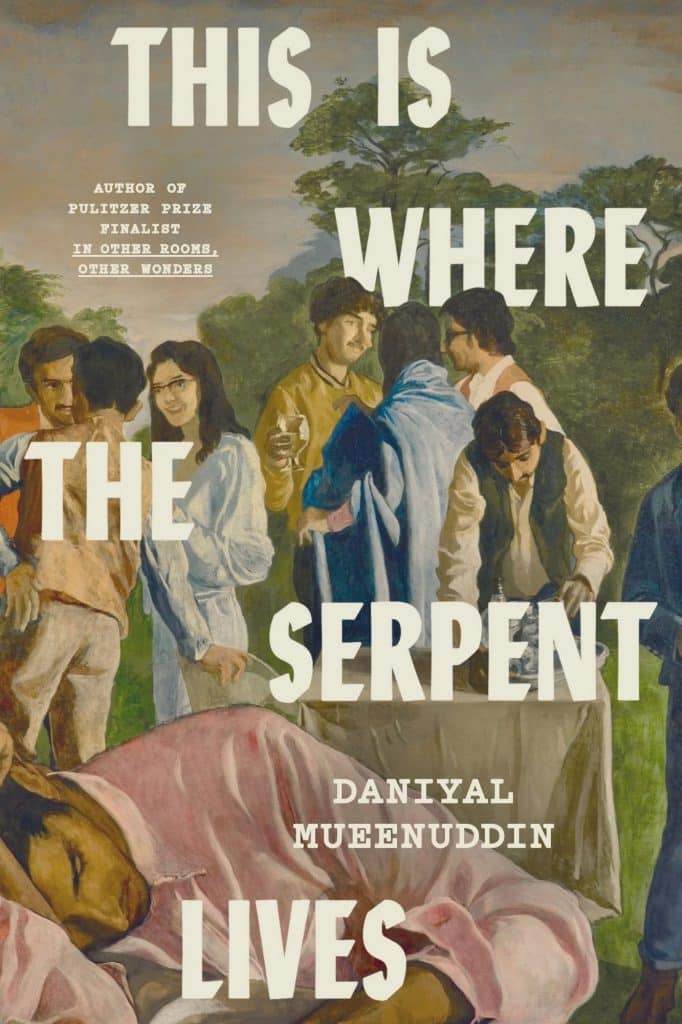
In the realms of power, money, and love, the characters in Daniyal Mueenuddin‘s work grapple with the choice between moral integrity and practical decisions that enable them to navigate the entrenched systems of caste, capital, and social influence in their culture. Profoundly moving and both intimate and epic, This Is Where the Serpent Lives is a remarkable work poised to become a classic of contemporary literature. The New York Times has listed it as one of “The Novels Everyone Will Be Talking About in 2026.”

Moving from Pakistan’s vibrant, chaotic cities to its lawless, feudal countryside, This Is Where the Serpent Lives vividly portrays contemporary life there. The story follows the intertwined fates of a dozen unforgettable characters, connected through violence, tragedy, triumph, and love.

Orphaned as a young boy and surviving on the streets of the city, Yazid rises to a position of responsibility and respect in the Lahore household of Colonel Atar, a powerful industrialist and politician. However, he soon finds his position threatened by conflicting loyalties and misplaced trust.

Born on Colonel Atar’s country estate to a poor gardener, Saqib is entrusted with managing a pioneering business. Yet, he overreaches and becomes an outlaw, facing the violent corruption of the Punjab Police. Meanwhile, the colonel’s son competes with his beloved brother for the affections of a woman, only to discover that her choice brings unexpected darkness and light into his life.


Daniyal Mueenuddin, raised in Lahore, Pakistan, and Elroy, Wisconsin, graduated from Dartmouth College and Yale Law School. His stories have appeared in prestigious publications such as The New Yorker, Granta, Zoetrope, and The Best American Short Stories 2008, which Salman Rushdie selected. His collection, “In Other Rooms, Other Wonders,” was a finalist for both the Pulitzer Prize and the National Book Award. For several years, he practiced law in New York. He currently splits his time between Oslo, Norway, and his farm in South Punjab, Pakistan.


Discover your next favorite book and dive into a world of curated, exciting reads by purchasing through my links. You’ll have access to a diverse selection of books I’ve personally vetted for quality and enjoyment. Additionally, by supporting these selections, you’ll help me continue to provide you with more personalized recommendations. I earn a small commission from your purchase, which allows me to buy and share even more books with you. Your support truly makes a difference!

×
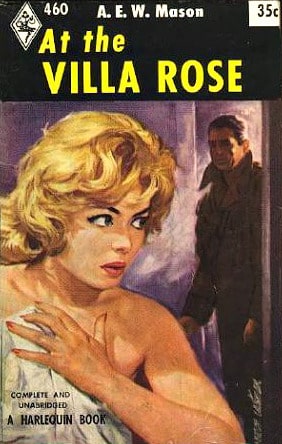
At the Villa Rose

Read: August 2022

Get this book

At the Villa Rose

by Major Alfred Edward Woodley Mason

At the Villa Rose by Major Alfred Edward Woodley Mason, initially published in 1910, is a mystery novel in which Major Mason introduced his French detective, Inspector Hanaud, who was an early template for Agatha Christie’s famous Hercule Poirot. Missing jewels, high adventure some one hundred and fifty kilometers from Geneva, a casino, and blind love are all factors in a complex case for Hanaud, which ultimately involves a gang of frightened murderers. If you enjoy deductive mysteries like me, I highly recommend At the Villa Rose.

The Goodreads summary,

In Aix les Bains during the early 20th century, Celia Harland, a beautiful (of course) young English girl down on her luck, is befriended by a wealthy widow, Madame Dauvray, an addict of “spiritualism,” and stages seances for her benefactrix, while knowing full well that the supposed manifestations from the spirit world are entirely bogus. This set-up supplies the opportunity for a criminal gang master-minded by Madame Dauvray’s maid, with their eyes on the widow’s jewelry collection, to engineer an introduction for one of their numbers, Adele Tacé (“Rossignol”), whose taunts of disbelief goad the old lady into allowing a seance to be held which, unsuspected by either Celia or her patron, will be the cover for murder and robbery.

The crux of the plot is that as a medium, Celia will be made their innocent victim, on whom suspicion is to be planted.


The Jan Lilien Education Fund sponsors ongoing sustainability and environmental awareness programs. All donations are tax-deductible.

Subscribe

Contact Us

I receive a commission when you buy a book or product using a link on this page. Thank you for supporting Sharing Jan’s Love blog.

×
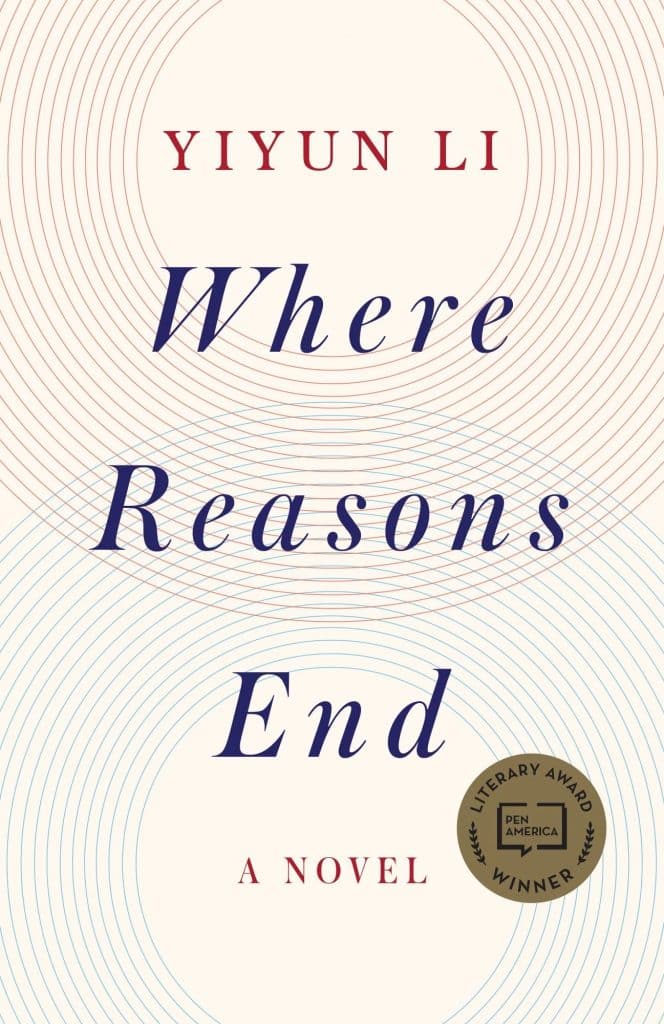
Where Reasons End

Read: June 2025

Get this book

Where Reasons End

by Yiyun Li

Yiyun Li, grappling with life’s deepest sorrows, invites readers into a poignant conversation between a mother and child in a timeless world.  Where Reasons End, composed in the aftermath of the loss of her son, ventures into the liminal space between life and death. Here, mother and child engage in conversations untethered from past images and narratives, a profoundly moving portrayal of the love and complexity of their relationship.

The narrator of Where Reasons End shares a profound insight, saying, “I clung to one delusion with all my might: We once gave Nikolai a life of flesh and blood; and I’m recreating it, this time through words.” This emotional journey of recreating a life through words is a central theme that resonates throughout the novel.

With a unique blend of originality, precision, and poise, Where Reasons End immerses readers in a world of intimacy, inescapable pain, and fierce love. The novel’s emotional impact is profound, leaving a lasting impression on those who delve into its pages.


Yiyun Li, a prolific author, has penned six works of fiction—Must I Go, Where Reasons End, Kinder Than Solitude, A Thousand Years of Good Prayers, The Vagrants, and Gold Boy, Emerald Girl—and the memoir Dear Friend, from My Life I Write to You in Your Life.

Her literary prowess has been recognized with numerous awards, including a PEN/Hemingway Award, a PEN/Jean Stein Book Award, a MacArthur Foundation fellowship, and a Windham-Campbell Prize.

She was also featured in The New Yorker’s 20 Under 40 fiction issue. Her work, which has been published in The New Yorker, A Public Space, The Best American Short Stories, and The O. Henry Prize Stories, among other publications, is a testament to her literary excellence.

Currently, she imparts her knowledge at Princeton University and resides in Princeton, New Jersey.


When you purchase a book through one of my links, I earn a small commission that helps support my passion for reading. This contribution allows me to buy even more books to share with you, creating an incredible cycle of discovering great reads together! Your support truly makes a difference!
Enjoy a limited-time offer of 20% off your next book purchase at Bookshop.org!


×
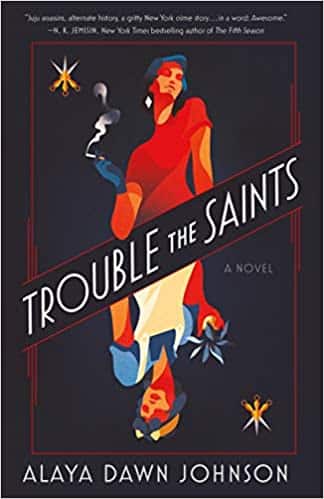
Trouble the Saints

Read: January 2022

Get this book

Trouble the Saints

by Alaya Dawn Johnson

Trouble the Saints by Alaya Dawn Johnson is one of NPR’s Books We Love from 2020. The dangerous magic of The Night Circus meets the powerful historical exploration of The Underground Railroad in this timely and unsettling novel, set against the darkly glamorous backdrop of New York City at the dawn of WWII. Amidst the whir of city life, a girl from Harlem is drawn into the glittering underworld of Manhattan, where she’s hired to use her knives to strike fear amongst its most dangerous denizens.

The book is written in three sections with different protagonists and voices. Phyllis, or Pea as her friends call her, is a black assassin for a white mob boss narrates the first section of the book. Her saint’s hands are the ability to use knives to commit murder. She can also pass as white as Phyllis, but she is a black woman from Harlem as Pea. The section she narrates is difficult at first to follow as she attempts to deal with the consequences of her actions. Can the past ever be the past?

Dev, Indian and Phyllis’s lover, narrates the second section. He is an undercover cop who protects her and helps her free herself from the mob boss. This section is located in the Hudson Valley and highlights the tensions before the war between whites and non-whites.

The third protagonist, Tamara, narrates this section. The war separates Phyllis and Dev. Phyllis is pregnant, and Dev and Tamara’s love interest are serving in the military. This section brings together the threads and reminds us that the past is never the past.

As Goodreads summarizes the book,

But the ghosts from her past are always by her side—and history has appeared on her doorstep to threaten the people she loves most.

Can one woman ever sacrifice enough to save an entire community?

Trouble the Saints is a dazzling, daring novel—a magical love story, a compelling chronicle of interracial tension, and an altogether brilliant and deeply American saga.

I recommend this book and encourage all readers to read it to the end.

Subscribe

Contact Us

When you buy a book or product using a link on this page, I receive a commission. Thank you for supporting Sharing Jan’s Love blog.

×