
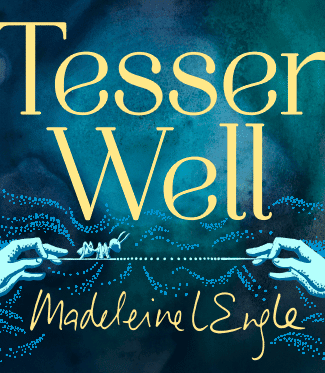
Tesser Well

Wrinkle in Time Not Wrinkles on my Face

Estimated reading time: 0 minutes, 44 seconds

A new day and a new month, and I am still alone. Friday will be seven months since the love of my life died.

Each day, week, and month makes the loss seem like it has lasted longer than our love for each other.

I keep seeking a tesseract – the “wrinkle” in space and time from – A Wrinkle in Time by Madeleine L’Engle, so I can time travel back to be with Jan.

If only it were possible to time travel to kiss her and tell her how much I love her!

Unfortunately, the only wrinkles I have are on my face.

Subscribe

Contact Us

When you buy a book or product using a link on this page, I receive a commission. Thank you for supporting Sharing Jan’s Love blog.

Celebrate Jan

Share your thoughts and ideas

This site uses Akismet to reduce spam. Learn how your comment data is processed.

The Jan Lilien Education Fund!

Tesser Well
×
The Heat Will Kill You First

Read: July 2023

Get this book

The Heat Will Kill You First

by Jeff Goodell

I recently started reading “The Heat Will Kill You First” by Jeff Goodell, which delves into the extreme ways our planet is already changing. The book explores how spring is arriving earlier and fall is arriving later and how this will impact our food supply and disease outbreaks. As I have stated in my Action Alert: EPA’s Carbon Rule, the time to act is now.

The book also predicts the consequences of summer days in cities like Chicago and Boston, reaching temperatures as high as 110°F. Goodell explains that heat waves are used only to affect the most vulnerable people, but as they become more intense and familiar, they will affect everyone.

It is becoming increasingly clear that the world is facing a new reality. In California, wildfires are now seasonal, while the Northeast is experiencing less and less snow each winter. Meanwhile, the Arctic and Antarctic ice sheets are melting alarmingly. Heat is the primary threat that is driving all other impacts of the climate crisis. As temperatures rise, it exposes weaknesses in our governments, politics, economy, and values.

The basic science is straightforward: If we stop burning fossil fuels tomorrow, the global temperature will also stop rising. However, if we wait for 50 years to stop burning them, the temperature will continue to rise, making parts of our planet uninhabitable. The responsibility to act is in our hands. The hotter it gets, the more our underlying issues will surface and expand.

Jeff Goodell has been an award-winning journalist in the field of environmental reporting for several decades. His latest book explains how extreme heat will cause significant changes in the world. The book is an excellent blend of scientific insights and on-the-ground storytelling, and Goodell explores some of the most significant questions surrounding the topic. He reveals that extreme heat is a force we have yet to comprehend fully.


The Jan Lilien Education Fund sponsors ongoing sustainability and environmental awareness programs. Gifts made this month; I will match dollar-for-dollar. All donations are tax-deductible.

Subscribe

Contact Us

I receive a commission when you buy a book or product using a link on this page. Thank you for supporting Sharing Jan’s Love blog.


×
Autobiography of Cotton

Read: February 2026

Get this book

Autobiography of Cotton

by Cristina Rivera Garza

In 1934, a young José Revueltas traveled to Tamaulipas to support the cotton workers’ strike in Estación Camarón, which would later serve as the foundation for his landmark novel, Human Mourning. In her groundbreaking novel Autobiography of Cotton, Cristina Rivera Garza recounts her grandparents’ journey from mining towns to those same cotton fields. Her narrative intersects with Revueltas’s life and offers a vivid and evocative account of the history of cotton cultivation along the Mexico-U.S. border.

Through archival research and personal narrative, Rivera Garza explores how cotton transformed the borderlands by recounting the story of the cotton workers’ strike. She reveals how cycles of deprivation and environmental destruction continue to affect generations. Rivera Garza skillfully creates a new kind of border novel that illustrates how a fragile landscape drastically changed her grandparents’ lives and the territories they helped to develop. In this intimate fictionalization, Autobiography of Cotton offers a rich social history that encompasses agricultural colonization, labor activism, environmental degradation, and cross-border migration.

I recommend “Autobiography of Cotton,” but readers should be patient as the book shifts back and forth in time. Everything becomes clear as you continue reading.


Cristina Rivera Garza is the Pulitzer Prize–winning author of Liliana’s Invincible Summer. A MacArthur Fellow, she is the Hugh Roy and Lillie Cranz Cullen Distinguished Chair and founder of the University of Houston’s PhD in Creative Writing in Spanish.

Christina MacSweeney is the award-winning literary translator of works by Julián Herbert, Valeria Luiselli, and Elvira Navarro. She received the 2024 Sundial Literary Translation Award for her translation of Verónica Gerber Bicecci‘s The Company.


Discover your next favorite book and dive into a world of curated, exciting reads by purchasing through my links. You’ll have access to a diverse selection of books that I’ve personally vetted to ensure quality and enjoyment. Additionally, by supporting these selections, you’ll help me continue to provide you with more personalized recommendations. I earn a small commission from your purchase, which allows me to buy and share even more books with you. Your support truly makes a difference!


×
Invisible Child

Read: December 2021

Get this book

Invisible Child: Poverty, Survival & Hope in an American City

by Andrea Elliott

Invisible Child: Poverty, Survival & Hope in an American City by Andrea Elliott was a gift from my son Jon. The New York Times selected “Invisible Child” as one of the best books published this year. It is indeed one of the top books on my all-time list.

GoodReads summary provides a good overview,

The riveting, unforgettable story of a girl whose indomitable spirit is tested by homelessness, poverty, and racism in an unequal America—from Pulitzer Prize-winning journalist Andrea Elliott of The New York Times

Invisible Child follows eight dramatic years in the life of Dasani Coates, a child with imagination as soaring as the skyscrapers near her Brooklyn homeless shelter. Born at the turn of a new century, Dasani is named for the bottled water that comes to symbolize Brooklyn’s gentrification and the shared aspirations of a divided city. As Dasani grows up, moving with her tight-knit family from shelter to shelter, this story goes back to trace the passage of Dasani’s ancestors from slavery to the Great Migration north. When Dasani comes of age, New York City’s homeless crisis explodes as the chasm deepens between rich and poor.

In the shadows of this new Gilded Age, Dasani must lead her seven siblings through a thicket of problems: hunger, parental drug addiction, violence, housing instability, segregated schools, and the constant monitoring of the child-protection system. When, at age thirteen, Dasani enrolls at a boarding school in Pennsylvania, her loyalties are tested like never before. As she learns to “code switch” between the culture she left behind and the norms of her new town, Dasani starts to feel like a stranger in both places. Ultimately, she faces an impossible question: What if leaving poverty means abandoning the family you love?

By turns heartbreaking and revelatory, provocative and inspiring, Invisible Child tells an astonishing story about the power of resilience, the importance of family, and the cost of inequality. Based on nearly a decade of reporting, this book vividly illuminates some of the most critical issues in contemporary America through the life of one remarkable girl.

Jan and I were involved and knew that child poverty and homelessness needed repair. In addition, Jan lived on Washington Park across from Ft. Greene Park in 1974-75. We knew the neighborhood where much of the book’s story takes place. 

Before meeting Jan in 1973, I was both a community/tenant organizer and a youth worker. In the latter role, I made weekly hostel trips for eight to ten young boys from East Williamsburg during 1973. The trips were the first the boys had ever been outside of their neighborhood.

Many of them had imaginations like Dasani. They also had her instinct to fight. One of my first tasks was to check for any weapons.

Decades later, when I would see any of them, now adults, they would ask when we were going on another trip. I wish I had met Jan when I made those trips. She would have helped me improve them and document the impact. If I could re-write history, I would have her join me as the second adult on the hostel trips.

After that summer, it was clear my primary skills were as a community/tenant organizer. Over the next few years, my work focused on creating affordable and supportive housing.

Jan and I did meaningful work that made a difference, yet the need for a permanent solution to the crisis remains. The book highlights the crucial role of resilience, the importance of family, and the cost of inequality. As a nation, we cannot undermine those values by breaking up families, impeding resilience, and maintaining racial and economic inequality. 

The current debate in Washington over the Build Back Better legislation needs to focus not on how much we spend but on its impact on children and families

David Brooks, a conservative commentator, has supported these expenditures for what they can do to address this country’s cultural and economic crisis. 

These packages say to the struggling parents and the warehouse workers: I see you. Your work has dignity. You are paving your way. You are at the center of our national vision.

This is how you fortify a compelling moral identity, which is what all of us need if we’re going to be able to look in the mirror with self-respect. This is the cultural transformation that good policy can sometimes achieve. Statecraft is soulcraft.

If you can only read one book this year, this is the one to read. Child poverty, homelessness, and inequality impact all of us. Ending child poverty and homelessness will make us a healthier and more inclusive nation. It is time for a compelling moral call to action!

Subscribe

Contact Us

When you buy a book or product using a link on this page, I receive a commission. Thank you for supporting Sharing Jan’s Love blog.

×
Don't Be a Stranger: A Novel

Read: October 2024

Get this book

Don’t Be a Stranger: A Novel

by Susan Minot

Today, I began reading “Don’t Be a Stranger: A Novel” by Susan Minot, a captivating new work by the author of ‘Evening.’ Known for her lyrical prose and exploration of complex human relationships, Minot’s latest novel revolves around a woman involved in a love affair during midlife. It is a radiant tale that explores themes of erotic obsession, the desire for intimacy, communication, and oblivion, which will resonate with fans of Miranda July‘s ‘All Fours,’ a book I have also read.

Ivy Cooper is 52 years old when Ansel Fleming first enters her life. Twenty years her junior, a musician newly released from prison on a minor drug charge, Ansel’s beguiling good looks and quiet intensity instantly seduce her. Despite the gulf between their ages and experience, their physical chemistry is overpowering. Over the heady weeks and months that follow, Ivy finds her life bifurcated by his presence: On the surface, she is a responsible mother, managing the demands of friends, an ex-husband, and home, but emotionally, psychologically, sexually, she is consumed by desire and increasingly alive only in the stolen moments-out-of-time, with Ansel in her bed.

Don’t Be a Stranger is a gripping, sensual, and provocative work from one of the most remarkable voices in contemporary fiction.

×
Hey, Zoey

Read: June 2024

Get this book

Hey, Zoey: A Novel

by Sarah Crossan

Today, I enjoyed immersing myself in the captivating and thought-provoking world of Sarah Crossan‘s novel ‘Hey, Zoey.’ As Sarah Dunn eloquently puts it, this book is a masterful blend of brilliance and dark humor. The story revolves around Dolores O’Shea, whose life turns surprising when she discovers her husband’s AI sex doll, Zoey, in the garage.

A profound and heartfelt journey of self-discovery unfolds for Dolores as she and ‘Zoey‘ develop an unconventional bond, unearthing deeply buried emotions and memories. Dolores O’Shea, a 43-year-old woman, is a beacon of strength, juggling her job, ailing mother, and social life with remarkable efficiency.

Her marriage with an anesthesiologist, David, is in turmoil, but she’s determined to confront the issues. Her world is completely upended when she uncovers Zoey, the $8,000 AI sex doll that David had been concealing in the garage. At first, Dolores’ response to Zoey is a whirlwind of anger and confusion, throwing her meticulously organized life into chaos.

As the narrative unfolds, Dolores and Zoey embark on a series of conversations that unearth unexpected emotions and memories, profoundly influencing all of Dolores’ relationships, particularly her relationship with herself. Dolores’ journey is a rollercoaster of events and emotions that resonates with us all. ‘Hey, Zoey‘ is a novel that enthralls and challenges our perception of modern-day connections and the diverse forms that love can assume in a lifetime.

×
Worry: A Novel

Read: May 2024

Get this book

Worry: A Novel

by Alexandra Tanner

Today, I began reading Alexandra Tanner‘s debut novel, Worry: A Novel. The New Yorker praised it as “dryly witty,” The New York Times Book Review called it “fabulously revealing.” The story follows two siblings-turned-roommates who try to navigate an absurd world on the verge of calamity. It explores existentialism and sisterhood in a Seinfeldian style.

In March 2019, Jules Gold, a 28-year-old woman, felt anxious, frustrated with her art, and addicted to the internet. She lives alone in the apartment she used to share with her ex-fiancé. Her younger sister Poppy unexpectedly comes to stay with her indefinitely. Poppy, who attempted suicide a year and a half ago, is looking for work and purpose in Brooklyn. Meanwhile, Jules spends her days scrolling through the feeds of Mormon mommy bloggers and waiting for something to happen in her life.

Poppy’s hives, which she has had since childhood, flare up again. Jules has health problems with her uterus. Poppy adopts a poorly behaved-rescue dog named Amy Klobuchar. Poppy’s mother, who recently became a devout Messianic Jew, starts believing in the same deep-state conspiracy theories as Jules’ online mommies. Jules half-heartedly tries to find the source of her ennui and cruelly blames Poppy for not being a good enough friend, writer, or sister. As the year progresses and a new decade approaches, a disastrous trip back to Florida forces Jules and Poppy to question their futures and whether they want to spend them together or apart.

Worry is a darkly funny and deadpan portrayal of two sisters struggling through anxiety and uncertainty in America. A bold new voice in contemporary fiction writes it.

×