New Book: Autocorrect: Stories

Estimated reading time: 0 minutes, 0 seconds
Autocorrect

Autocorrect

"Autocorrect" by Etgar Keret, a prominent figure in Israeli literature and film, is a darkly humorous collection of stories that delves into themes of identity, reality, and meaning. These narratives resonate with our current times, characterized by uncertainty and fragility, marked by misunderstandings and miscommunications, as we seek reasons and the strength to foster hope.

Read book review Get this book All books

The Jan Lilien Education Fund!

Autocorrect

Read: August 2025

Get this book

Autocorrect: Stories

by Etgar Keret

Autocorrect” by Etgar Keret, a prominent figure in Israeli literature and film, is a darkly humorous collection of stories that delves into themes of identity, reality, and meaning. These narratives resonate with our current times, characterized by uncertainty and fragility, marked by misunderstandings and miscommunications, as we seek reasons and the strength to foster hope.

Etgar Keret‘s stories reveal the fault lines and uncomfortable truths in our society, all delivered in a style that is uniquely his own. He is the world’s most renowned living Israeli writer, known for his lean and accessible short stories that often blend whimsy, surrealism, and dark humor. Keret’s work explores the most minor and seemingly mundane aspects of life in profound and unusual ways.

The characters in his fiction face relatable challenges in work and relationships. They inhabit a world filled with rapidly advancing technology, yet the base nature of human passions and brutality repeatedly undermines this world. For instance, one character’s partner is a reality show contestant from a parallel dimension. At the same time, another discovers that the asteroid he paid to have named after his wife is on a collision course with Earth. In another story, an elderly widow persuades a popular AI program to commit suicide.


Etgar Keret, born in Ramat Gan in 1967, is a prominent figure in Israeli literature and film. Translated into more than forty languages, his writing has appeared in well-known publications such as The New York Times, Le Monde, and The New Yorker. He has received several prestigious awards, including the Caméra d’Or at the Cannes Film Festival in 2007, the Charles Bronfman Prize in 2016, and the esteemed Sapir Prize in 2018.

More than a hundred captivating short films and several remarkable feature films have brought his stories to life on the big screen. Keret teaches creative writing at Ben-Gurion University of the Negev. Since 2021, he has also been publishing a weekly newsletter titled “Alphabet Soup” on Substack.


When you purchase a book through one of my links, I earn a small commission that helps support my passion for reading. This contribution allows me to buy even more books to share with you, creating an incredible cycle of discovering great reads together! Your support truly makes a difference!

Enjoy a limited-time offer of 20% off your next book purchase at Bookshop.org!


×
The Days of Abandonment

Read: July 2024

Get this book

The Days of Abandonment

by Elena Ferrante

I’ve just started reading The Days of Abandonment by Elena Ferrante after finishing My Brilliant Friend. This book is among the New York Times’s 100 Best Books of the 21st Century. I chose to read it after watching An Undoing, a documentary about healing from an abusive 20-year marriage using unstitching wedding garments, one stitch at a time.

The film was part of the first night of the International Women’s Film Festival in Cranford. Although, except for one brief moment, I have never been in the same situation as the woman in the short video or Olga, the protagonist in the novel, I choose this as my next book to read. Of course, Ferrante’s writing is known for rich character development and powerful prose.

The Days of Abandonment follows the gripping story of an Italian woman named Olga, whose husband suddenly leaves after fifteen years of marriage. With two young children to care for, Olga finds it increasingly difficult to maintain her previous lifestyle of keeping a spotless house, cooking creative meals, and controlling her temper. After encountering her husband with his much younger lover in public, she even resorts to physically assaulting him.

In a “raging, torrential voice,” according to The New York Times, Olga describes her journey from denial to devastating emptiness. Trapped within the four walls of their high-rise apartment, she confronts her ghosts, the potential loss of her identity, and the possibility that life may never return to normal.

×
Misinterpretation

Read: August 2025

Get this book

Misinterpretation: A Novel

by Ledia Xhoga

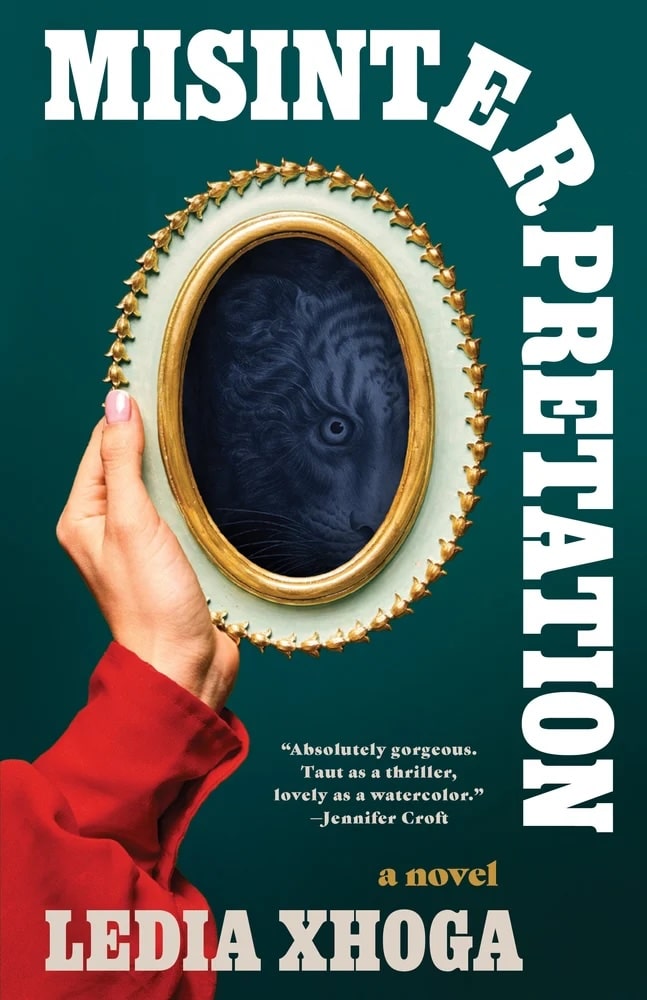
Ledia Xhoga‘s debut novel, Misinterpretation, is a reflective and engaging work longlisted for the 2025 Booker Prize. The novel delves into the darker legacies of family and country, exploring the tension between compassion and self-preservation. Additionally, it won the 2024 New York City Book Award for a first book, a prestigious recognition in the literary world. It was a finalist for the 2024 Center for Fiction First Novel Prize.

Set in present-day New York City, the story follows an Albanian interpreter who reluctantly agrees to work with Alfred, a Kosovar torture survivor, during his therapy sessions. Despite her husband’s warnings, she becomes increasingly entangled in her clients’ struggles. Alfred’s nightmares unearth her own buried memories, and an impulsive attempt to help a Kurdish poet leads to a risky encounter and a reckless plan. The emotional journey of the protagonist will surely resonate with you.

As a series of ill-fated decisions jeopardize the narrator’s marriage and mental health, she takes a spontaneous trip to reunite with her mother in Albania. This trip is a fascinating exploration of the contrast between her life in the United States and her roots back home. Upon returning, she must confront the consequences of her actions and question what is real and what is not.


Ledia Xhoga, the author of Misinterpretation, is an Albanian-American fiction writer and playwright. Her personal experiences and cultural background have deeply influenced her writing. Before earning an MFA in fiction from Texas State University, she worked in publishing in New York City. Her writing, which often explores themes of identity and belonging, has been featured in various journals, including Intrepid Times, Hobart, and KGB Magazine. Originally from Tirana, Albania, she now lives with her family in Brooklyn and the Catskills.


When you purchase a book through one of my links, I earn a small commission that helps support my passion for reading. This contribution allows me to buy even more books to share with you, creating an incredible cycle of discovering great reads together! Your support truly makes a difference!

Enjoy a limited-time offer of 20% off your next book purchase at Bookshop.org!


×
Sarah's Key

Read: January 2022

Get this book

Sarah’s Key

by Tatiana de Rosnay

Sarah’s Key by Tatiana de Rosnay is the untold story of the roundup of the Jews in Paris in July 1942. The novel focuses on how the French were complicit in rounding up thousands of Jews in 1942. It is also a reminder that we can never allow another genocide. I finished this book the day before Holocaust Remembrance Day, January 27, the date on which the Auschwitz-Birkenau concentration and death camp complex was liberated in 1945.

Ten-year-old Sarah is brutally arrested with her family in the Vel’ d’Hiv’ roundup, the most notorious act of French collaboration with the Nazis. But before the police come to take them, Sarah locks her younger brother, Michel, in their favorite hiding place, a cupboard in the family’s apartment. She keeps the key, thinking she will be back within a few hours.

Paris, May 2002: On Vel’ d’Hiv’s sixtieth anniversary, Julia Jarmond, an American journalist, is asked by her Paris-based American magazine to write an article about this black day in France’s past. Julia has lived in Paris for nearly twenty-five years and married a Frenchman, and she is shocked both by her ignorance about the event and the silence that still surrounds it.

The twin narratives of Sarah and Julia hold the first two-thirds of the book together and make it a page-turner. Sarah’s memory reminds us during the final third of the book and ensures that the complete story of the Vel’ d’Hiv’ roundup and its lasting impact are told.

As Goodreads describes the novel,

In the course of her investigation, she stumbles onto a trail of long-hidden family secrets that connects her to Sarah. Julia finds herself compelled to retrace the girl’s ordeal, from the terrible days spent shut in at the Vel’ d’Hiv’ to the camps and beyond. As she probes into Sarah’s past, she begins to question her own place in France and to reevaluate her marriage and her life.

Writing about the fate of her country with a pitiless clarity, Tatiana de Rosnay offers us a brilliantly subtle, compelling portrait of France under occupation and reveals the taboos and denial surrounding this painful episode in French history.

I highly recommend the book.

Subscribe

Contact Us

When you buy a book or product using a link on this page, I receive a commission. Thank you for supporting Sharing Jan’s Love blog.

×
Remarkably Bright Creatures

Read: January 2024

Get this book

Remarkably Bright Creatures

by Shelby Van Pelt

Today, I recommended reading “Remarkably Bright Creatures” by Shelby Van Pelt. It’s a charming, witty, and compulsively readable exploration of friendship, reckoning, and hope. The novel traces the unlikely connection of a widow with a giant Pacific octopus, making it perfect for fans of “A Man Called Ove.” Shelby Van Pelt’s debut novel is a gentle reminder that sometimes, looking at the past can help uncover a future that once felt impossible.

The story follows Tova Sullivan, who works the night shift at the Sowell Bay Aquarium after her husband dies. Tova has been coping with loss since her eighteen-year-old son, Erik, mysteriously vanished on a boat in Puget Sound over thirty years ago.

While at the aquarium, Tova becomes acquainted with Marcellus, a grumpy giant Pacific octopus who refuses to cooperate with his human captors. However, Marcellus forms a remarkable friendship with Tova and helps her uncover the truth about her son’s disappearance.

As a detective, Marcellus uses his invertebrate body to deduce what happened when Tova’s son disappeared. Together, they embark on a journey to unearth the truth before it’s too late.


The Jan Lilien Education Fund sponsors ongoing sustainability and environmental awareness programs. Gifts made this month; I will match dollar-for-dollar. All donations are tax-deductible.

Subscribe

Contact Us

I receive a commission when you buy a book or product using a link on this page. Thank you for supporting Sharing Jan’s Love blog.


×
Breathe

Read: September 2021

Get this book

Breathe

by Joyce Carol Oates

Celebrate JanReading Breathe by Joyce Carol Oates was a book I knew I needed to read once Jan was diagnosed. Although the book might trigger negative memories, I finally read Breathe. It was what I needed to read at this point in my journey.

Ms. Oates wrote the book in 2019 after her husband, Charlie Gross, died. The novel is a story of love, loss, and loneliness, topics that I write about on this blog. I needed to read the book both for my mental health and for the readers of Sharing Jan’s Love.

The protagonist, Michaela, loses her husband while they are on a sabbatical in New Mexico. Her husband, Gerard, writes a book and teaches a class on memories. Jan and I never considered relocating before her illness, but this book convinced me that it would have aggravated my grief journey.

One of the parallels I observed while reading the novel is the similarity between Gerard’s reluctance to let family, friends, and co-workers know of his illness. Jan shared that reluctance in the early days, but I convinced her that the only chance of beating cancer was with the help of family and friends.

This dialogue could easily be one that Jan and I had.

Of course you want to summon his family—his (adult) children—but quickly, he says no.

Still waiting.

But – When?

Just not yet.

He is not an alarmist. (You are the alarmist.)

The novel is written in two parts – The Vigil and the Post-Mortem.

The opening paragraphs set the tone.

A Hand is gripping yours. Warm, dry hand gripping your slippery, humid hand.

Whoever it is urging you – Breathe!

Leaning over you begging you – Breathe!

As one mourning the death of the love of his life, I found several phrases in the book helpful in understanding what I have gone through and will continue to confront.

Among them is grief-vise, which I have written about in this stream.

In the grip of the grief vise, all that you will do, all that you even imagine doing, will require many times more effort.. Hardly daring to breathe for the grief-vise will tighten around your chest, squeezing the very air out of your lungs.

In the early stages of grief, the vise was strangling me. Breathing was impossible, and weeping was constant at times.

Michaela struggles with her grief. Seeing her husband every time she sees a man alone, even if they are older or younger than he was. I know I have felt Jan’s presence and still expect her to walk into our apartment.

Her struggles with a grief counselor and overly helpful friends are an experience I have not had but are familiar to those suffering from losing a loved one.

The last chapters are ones in which time becomes confusing and chaotic. At times, I was uncertain about which were real or imagined. The end, like all good novels, was ambiguous.

These are some of the other phrases I have found useful and will include in posts.

  • If there is no one to love, do we merit existence?
  • Never come to the end of kissing.
  • The first principle of life is; Breathe.
  • Shy in the language of intimacy.
  • As if a life lived with strangers could compensate for the emptiness in your heart.
  • No purpose in your life. No compass.

What you love most, that you will lose. The price of your love is your loss.

I recommend this book to all readers, even those struggling with grief.

Subscribe

Contact Us

When you buy a book or product using a link on this page, I receive a commission. Thank you for supporting Sharing Jan’s Love blog.

×
My Brilliant Friend

Read: July 2024

Get this book

My Brilliant Friend

by Elena Ferrante

Today, I delved into Elena Ferrante‘s captivating novel My Brilliant Friend. This acclaimed book hailed as the #1 Book of the 21st Century by the New York Times, weaves a timeless tale of the enduring bond between two women from Naples. With its rich character development and evocative historical setting, it stands alongside other character-driven works of literary fiction.

Beginning in the 1950s in a poor but vibrant neighborhood on the outskirts of Naples, Elena Ferrante’s four-volume story spans almost sixty years. The main characters, the fiery and unforgettable Lila and the bookish narrator, Elena, are bound by an enduring friendship that withstands the test of time and life’s challenges. This first novel in the series follows Lila and Elena from their fateful meeting as ten-year-olds through their school years and adolescence, evoking a sense of enduring connection and emotional resonance.

Through the lives of these two women, Ferrante weaves a compelling narrative of a neighborhood, a city, and a country undergoing profound transformation. These societal changes, in turn, also reshape the relationship between the two women, adding a rich layer of historical and cultural context to the story. This context will enrich your reading experience and provide a deeper understanding of the characters and their journey.

×