Flowers Everywhere

Estimated reading time: 14 minutes, 17 seconds
Flower Shopping

Hey Jon, are you all set to join me for flower shopping?” I called out to him, my voice echoing through the rearranged first floor of our home. My sons had cleared the sitting area primarily, and the dining room table was closer to the bookcase. Mike and Jon had also moved her recliner to the ground floor so she could sit up and not always be in bed. However, the most prominent feature in the room was the hospital bed, which now served as the centerpiece. I had grown accustomed to seeing these beds over the past sixteen months, and it almost seemed to belong there. I breathed a sigh of relief as Jon descended the stairs just in time to prevent my emotions from getting the better of me. Jan was coming home for the last time.

As we turned from Alden Street onto Miln, we had one goal: to reach the florist. We had two options to ensure we could bring back the flowers. Mike could meet us at the florist or use Jan’s car in the parking lot off Miln, which we had passed. As we walked towards the florist, I mentioned to Jon that there used to be a florist around the corner, but they had relocated their shop closer to the Garden State Parkway after a fire broke out in their previous building. Unfortunately, upon reaching the North Avenue store, we found it closed. Disappointed, we wondered what our next plan of action should be. Jon suggested that we could at least use the car, which was close by. I agreed and asked him to text Mike while I drove to the Cranford Florist, hoping to find what we were looking for.

When we entered the florist’s shop, a friendly face near the entrance greeted us and asked how they could assist us. I stumbled over my words as I tried to explain that we needed flowers for my wife, who was coming home for hospice care. I wanted to fill our home with beautiful blooms to make her feel more comfortable during her final days. Despite my raw nerves, I managed to convey our intentions. Fortunately, the florists were understanding and kind. They asked us about our budget and promised to select the perfect flowers for the occasion. I gave them complete freedom to choose whatever they thought was appropriate, regardless of the cost. I trusted their expertise and wanted to ensure my wife received the best.

Glancing down at my watch, I realized it was already late. Not wanting to cause any inconvenience, I told Jon that he should contact Mike and arrange for him to pick Jon up. After all, we still had a lot of preparations to do. Mike was already on his way, so I advised Jon to meet him at Dairy Queen on the other side of the street. Before leaving the store, I promised the florist that I would return. I helped Jon locate the Tastee Freeze and cross the busy street safely. As Jon reached the other side, we caught sight of Mike’s car zooming by.

After saying goodbye to Jon, I returned to the flower store. I caught the owner’s eye as I walked through the door, wondering if she remembered me. In the past, I used to buy my wife several roses, each one symbolizing a year of our marriage

I greeted the owner with a warm smile and asked how she was doing. She stood up from her desk and replied, “I hear your wife is coming home for hospice. My condolences.” 

As I prepared to respond, I couldn’t help but notice the sadness in her eyes. She explained she had lost her husband just four months prior, and she understood all too well the pain and grief that I was about to experience. It was the first time that someone had offered their condolences to me, but unfortunately, it wouldn’t be the last.

The other florist came to the office to tell me everything was ready. I asked how much I owed, and they waved off my thoughts, saying, “A hundred dollars will do.” I was baffled since it looked like more than that on the table. But they insisted, “Your wife needs flowers. We are florists, and we help each other.”

As I stepped out of the florist, I was grateful for the other florist’s offer to help me carry the flowers to my car. She expertly arranged the delicate blooms in my arms, and soon enough, my car’s entire back seat and passenger seat were full. I was relieved that Mike had picked up his brother, and I could use all the space available. I thanked the kind florist for her help and buckled myself in, feeling accomplished and satisfied.
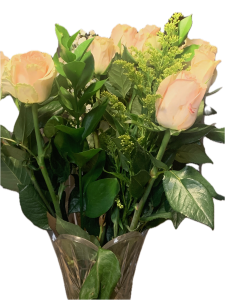
One Rose Changed My Life

As I started the engine, I realized I could make a left turn, which I had not expected would be possible. The drive back to our apartment was a blur of emotions – gratitude for the kind florist’s help, anxiety about transporting the flowers safely, and excitement to see my sons’ faces light up when they saw the beautiful flowers.

Mike met me downstairs, and we ferried the flowers to the elevator. I could feel the weight of the flowers on my arms, and I did everything possible not to cry, but I had failed miserably. As we rode the elevator to our floor, tears streamed down my face, and I struggled to keep my composure.

I moved the car to the parking lot while Mike was on the way to the third floor, and I took a moment to catch my breath and calm my nerves. Walking back to our home with flowers everywhere, I pulled myself together so no one could see I had cried. But it did not stop the tears inside my heart and soul as I realized how much I loved my wife.

Pages: 1 2 3

26 comments add your comment

Share your thoughts and ideas

This site uses Akismet to reduce spam. Learn how your comment data is processed.

Previous Post:

Next Post:

The Jan Lilien Education Fund!

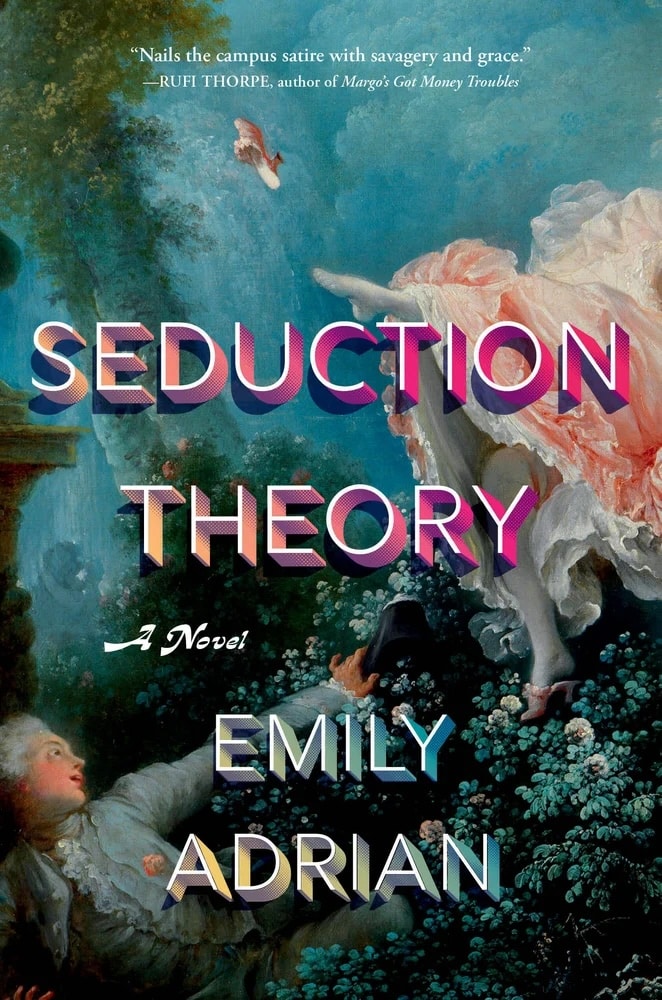
Seduction Theory

Read: September 2025

Get this book

Seduction Theory

by Emily Adrian

Seduction Theory by Emily Adrian is a captivating exploration of the complex interplay between power and attraction. This thought-provoking narrative beautifully illustrates how love and betrayal can intertwine. As two married professors navigate the delicate path toward infidelity, a graduate student’s compelling thesis project unveils their hidden struggles, creating a fascinating tale of desire and consequence.

Simone is a shining star in the creative writing department at Edwards University, celebrated for her scholarship on Woolf, her poignant memoirs of grief, and her captivating presence on campus. Her husband, Ethan, although not as widely recognized, is a dedicated lecturer and author whose work has a quietly impactful impact. Together, they portray a picture of marital bliss that everyone admires—until an unexpected turn shakes their world when Ethan has an affair with Abigail, the department’s administrative assistant.

As summer unfolds, Simone faces her own struggles. With Ethan away, she becomes increasingly close to her talented advisee, graduate student Roberta “Robbie” Green. They share runs, secrets, and dreams. Still, unbeknownst to Simone, Robbie is crafting an MFA thesis that delves into the complexities of Simone’s marriage, weaving a narrative that may reveal more than Simone anticipates.

Through Robbie’s unique lens, the intricacies of relationships, truth, and self-discovery come to the fore, creating a captivating story that promises to explore the delicate threads binding their lives together in unexpected ways.


Emily Adrian is the author of Everything Here is Under Control and The Second Season, as well as the memoir Daughterhood and two critically acclaimed novels for young adults. Her work has appeared in Granta, Joyland, The Point, EPOCH, Alta Journal, and Los Angeles Review of Books. Originally from Portland, Oregon, Adrian currently lives in New Haven, Connecticut.


Discover your next favorite book and dive into a world of curated, exciting reads by purchasing through my links. You’ll have access to a diverse selection of books that I’ve personally vetted to ensure quality and enjoyment. Additionally, by supporting these selections, you’ll help me continue to provide you with more personalized recommendations. I earn a small commission from your purchase, which allows me to buy and share even more books with you. Your support truly makes a difference!


×
The Heaven & Earth Grocery Store

Read: November 2023

Get this book

The Heaven & Earth Grocery Store

by James McBride

I started reading The Heaven & Earth Grocery Store: A Novel by James McBride today. It’s the seventy-first book I’ve read this year and the two hundredth since January 1, 2019. The novel’s narrative begins in 1972 when workers in Pottstown, Pennsylvania, were digging the foundations for a new development. They were surprised to find a skeleton at the bottom of the well. The identity of the skeleton and how it ended up there were long-held secrets that the residents of Chicken Hill kept.

Jewish immigrants and African Americans lived together in this run-down neighborhood and shared their aspirations and hardships. Moshe and Chona Ludlow resided in Chicken Hill when Moshe integrated his theatre, and Chona ran the Heaven & Earth Grocery Store. When the state officials searched for a deaf boy to institutionalize him, it was Chona and Nate Timblin, the Black janitor at Moshe’s theatre and the unofficial leader of the Black community on Chicken Hill, who collaborated to keep the boy safe.

As the stories of these characters intertwine and develop, it becomes evident how much the individuals living on the outskirts of white, Christian America struggle to survive and what they must do to make it through. As the truth is ultimately disclosed regarding the events that occurred on Chicken Hill, including the involvement of the town’s white establishment, McBride illustrates to us that, even in the darkest of times, love and community – the very essence of heaven and earth – help us endure.

Bringing his masterly storytelling skills and deep faith in humanity to The Heaven & Earth Grocery Store, James McBride has written a novel as compassionate as Deacon King Kong and as inventive as The Good Lord Bird.

The Jan Lilien Education Fund sponsors ongoing sustainability and environmental awareness programs. Regarding gifts made this month, I will match dollar for dollar. All donations are tax-deductible.

Subscribe

Contact Us

I receive a commission when you buy a book or product using a link on this page. Thank you for supporting Sharing Jan’s Love blog.


×
Light to the Hills

Read: January 2023

Get this book

Light to the Hills: A Novel

by Bonnie Blaylock

Light to the Hills: A Novel by Bonnie Blaylock is about Amanda Rye, a young widowed mother and traveling packhorse librarian who comes through a mountain community struck by the nation’s economic collapse in the 1930s. I recommend this page-turner as it highlights the importance of family and community. From this foundation, truth lights a path toward survival, mountain justice, forgiveness, and hope.

The novel was recommended by Olivia Hawker, bestselling author of The Fire and the Ore, who said, “Light to the Hills is a touching meditation on motherhood and the importance of community, especially during difficult times.”

Last year I read a modern tale about Appalachia, Demon Copperhead. Both are good novels but very different.

Light to the Hills was a feel-good read despite the problems faced by Ms. Rye and the MacInteer family. It was precisely the book I needed to read this week.

The Goodreads summary provides an overview,

The folks in the Kentucky Appalachians are scraping by. Coal mining and hardscrabble know-how are a way of life for these isolated people. But when Amanda Rye, a young widowed mother and traveling packhorse librarian, comes through a mountain community walloped by the nation’s economic collapse, she brings with her hope, courage, and apple pie. Along the way, Amanda takes a shine to the MacInteer family, especially to the gentle Rai, her quick-study daughter, Sass, and Finn, the eldest son who’s easy to warm to. They remind Amanda of her childhood and her parents with whom she longs to be reconciled.

Her connection with the MacInteers deepens, and Amanda shares with them a dangerous secret from her past. When that secret catches up with Amanda in the present, she, Rai, Sass, and Finn find their lives intersecting—and threatened—in the most unexpected ways. Now, they must come together as the truth lights a path toward survival, mountain justice, forgiveness, and hope.


The Jan Lilien Education Fund sponsors ongoing sustainability and environmental awareness programs. Gifts made this month; I will match dollar-for-dollar. All donations are tax-deductible.

Subscribe

Contact Us

I receive a commission when you buy a book or product using a link on this page. Thank you for supporting Sharing Jan’s Love blog.


×
The Vanishing Half

Read: September 2021

Get this book

The Vanishing Half

by Brit Bennett

The Vanishing Half by Brit Bennett was a true page-turner, and I did not want to stop reading it even when I got to the last page. I am not a fan of sequels, but if I was ever going to change my mind, this is the book I would want to read a sequel.

Ms. Bennett focuses on two twins who run away from home at age 16. They have grown up in Mallard, a fictional town in Louisiana. “In Mallard, nobody married dark,” Bennett writes starkly. Over time, its prejudices deepened as its population became lighter and lighter, “like a cup of coffee steadily diluted with cream.” The twins, with their “creamy skin, hazel eyes, wavy hair,” would have delighted the town’s founder. One of the women chooses to pass as white while the other does not.

The Vignes twin sisters will always be identical. But after growing up together in a small, southern black community and running away at age sixteen, it’s not just the shape of their daily lives that is different as adults, it’s everything: their families, their communities, their racial identities. Many years later, one sister lives with her black daughter in the same southern town she once tried to escape. The other passes for white, and her white husband knows nothing of her past. Still, even separated by so many miles and just as many lies, the fates of the twins remain intertwined. What will happen to the next generation, when their own daughters’ storylines intersect?

Weaving together multiple strands and generations of this family, from the Deep South to California, from the 1950s to the 1990s, Brit Bennett produces a story that is at once a riveting, emotional family story and a brilliant exploration of the American history of passing. Looking well beyond issues of race, The Vanishing Half considers the lasting influence of the past as it shapes a person’s decisions, desires, and expectations, and explores some of the multiple reasons and realms in which people sometimes feel pulled to live as something other than their origins.

The question of why people choose to live differently than their origins is one that I often ponder. Growing up in a small town and living in a metropolis raises questions for me as to what my life is now and what was once.

I strongly recommend this book.

Subscribe

Contact Us

×
James: A Novel

Read: June 2024

Get this book

James: A Novel

by Percival Everett

I started reading “James: A Novel” by Percival Everett, my fiftieth book this year. After reading only a few pages, I knew I had selected the perfect novel. The story revolves around an enslaved man named Jim who overhears that he is about to be sold to a man in New Orleans, separating him from his wife and daughter forever. In response, he decides to hide on nearby Jackson Island while formulating a plan.

Simultaneously, we encounter Huck Finn, who has staged his death to flee his abusive father and has recently resurfaced in town. The narrative unfolds as they embark on a perilous journey, navigating the Mississippi River on a raft. Each turn brings floods, storms, and unexpected encounters, including a run-in with the Duke and Dauphin.

While the familiar elements of ‘Adventures of Huckleberry Finn‘ are present, ‘James: A Novel‘ offers a unique perspective. It illuminates Jim’s agency, intelligence, and compassion, challenging our preconceived notions and offering a fresh take on a classic narrative.

James: A Novel‘ is not just a book; it’s a cornerstone of twenty-first-century American literature. It’s a testament to Everett’s literary prowess, solidifying his status as a true icon in the literary world.


When you purchase a book through one of my links, I earn a small commission that helps support my passion for reading. This contribution allows me to buy even more books to share with you, creating an incredible cycle of discovering great reads together! Your support truly makes a difference!


×
Losing Earth: A Recent History

Read: October 2019

Get this book

Losing Earth: A Recent History

by Nathaniel Rich

Losing Earth: A Recent History by Nathaniel Rich reminds us how close we were to halting the climate emergency, and our failure has resulted in our passing the tilting point. The book “reveals, in previously unreported detail, the birth of climate denialism and the genesis of the fossil-fuel industry’s coordinated effort to thwart climate policy through misinformation propaganda and political influence.”

By 1979, we knew nearly everything we understand today about climate change – including how to stop it. Over the next decade, a handful of scientists, politicians, and strategists, led by two unlikely heroes, risked their careers in a desperate, escalating campaign to convince the world to act before it was too late. Losing Earth is their story and ours.

The New York Times Magazine devoted an entire issue to Nathaniel Rich’s groundbreaking chronicle of that decade, which became an instant journalistic phenomenon – the subject of news coverage, editorials, and conversations all over the world. In its emphasis on the lives of the people who grappled with the significant existential threat of our age, it made vivid the moral dimensions of our shared plight.

Losing Earth tells the human story of climate change in even richer, more intimate terms. It reveals, in previously unreported detail, the birth of climate denialism and the genesis of the fossil-fuel industry’s coordinated effort to thwart climate policy through misinformation propaganda and political influence. The audiobook carries the story into the present day, wrestling with the long shadow of our past failures and asking crucial questions about how we make sense of our past, our future, and ourselves.

Like John Hersey’s Hiroshima and Jonathan Schell’s The Fate of the Earth, Losing Earth is the rarest of achievements: a riveting work of dramatic history that articulates a moral framework for understanding how we got here and how we must go forward.

Losing Earth is a must-read book!

Subscribe

Contact Us

×

Discover more from Sharing Jan’s Love

Subscribe now to keep reading and get access to the full archive.

Continue reading