
Garden7
Estimated reading time: 0 minutes, 0 seconds
Subscribe to Sharing Jan's Love Newsletter!
by Andrea Elliott
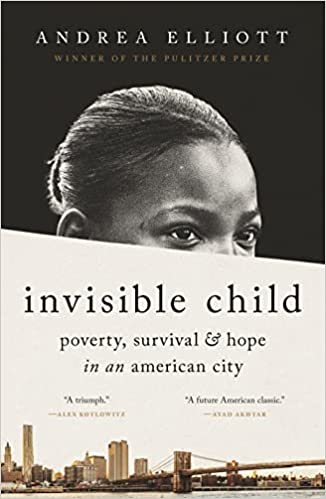
Invisible Child: Poverty, Survival & Hope in an American City by Andrea Elliott was a gift from my son Jon. The New York Times selected “Invisible Child” as one of the best books published this year. It is indeed one of the top books on my all-time list.
GoodReads summary provides a good overview,
The riveting, unforgettable story of a girl whose indomitable spirit is tested by homelessness, poverty, and racism in an unequal America—from Pulitzer Prize-winning journalist Andrea Elliott of The New York Times
Invisible Child follows eight dramatic years in the life of Dasani Coates, a child with imagination as soaring as the skyscrapers near her Brooklyn homeless shelter. Born at the turn of a new century, Dasani is named for the bottled water that comes to symbolize Brooklyn’s gentrification and the shared aspirations of a divided city. As Dasani grows up, moving with her tight-knit family from shelter to shelter, this story goes back to trace the passage of Dasani’s ancestors from slavery to the Great Migration north. When Dasani comes of age, New York City’s homeless crisis explodes as the chasm deepens between rich and poor.
In the shadows of this new Gilded Age, Dasani must lead her seven siblings through a thicket of problems: hunger, parental drug addiction, violence, housing instability, segregated schools, and the constant monitoring of the child-protection system. When, at age thirteen, Dasani enrolls at a boarding school in Pennsylvania, her loyalties are tested like never before. As she learns to “code switch” between the culture she left behind and the norms of her new town, Dasani starts to feel like a stranger in both places. Ultimately, she faces an impossible question: What if leaving poverty means abandoning the family you love?
By turns heartbreaking and revelatory, provocative and inspiring, Invisible Child tells an astonishing story about the power of resilience, the importance of family, and the cost of inequality. Based on nearly a decade of reporting, this book vividly illuminates some of the most critical issues in contemporary America through the life of one remarkable girl.
Jan and I were involved and knew that child poverty and homelessness needed repair. In addition, Jan lived on Washington Park across from Ft. Greene Park in 1974-75. We knew the neighborhood where much of the book’s story takes place.
Before meeting Jan in 1973, I was both a community/tenant organizer and a youth worker. In the latter role, I made weekly hostel trips for eight to ten young boys from East Williamsburg during 1973. The trips were the first the boys had ever been outside of their neighborhood.
Many of them had imaginations like Dasani. They also had her instinct to fight. One of my first tasks was to check for any weapons.
Decades later, when I would see any of them, now adults, they would ask when we were going on another trip. I wish I had met Jan when I made those trips. She would have helped me improve them and document the impact. If I could re-write history, I would have her join me as the second adult on the hostel trips.
After that summer, it was clear my primary skills were as a community/tenant organizer. Over the next few years, my work focused on creating affordable and supportive housing.
Jan and I did meaningful work that made a difference, yet the need for a permanent solution to the crisis remains. The book highlights the crucial role of resilience, the importance of family, and the cost of inequality. As a nation, we cannot undermine those values by breaking up families, impeding resilience, and maintaining racial and economic inequality.
The current debate in Washington over the Build Back Better legislation needs to focus not on how much we spend but on its impact on children and families.
David Brooks, a conservative commentator, has supported these expenditures for what they can do to address this country’s cultural and economic crisis.
These packages say to the struggling parents and the warehouse workers: I see you. Your work has dignity. You are paving your way. You are at the center of our national vision.
This is how you fortify a compelling moral identity, which is what all of us need if we’re going to be able to look in the mirror with self-respect. This is the cultural transformation that good policy can sometimes achieve. Statecraft is soulcraft.
If you can only read one book this year, this is the one to read. Child poverty, homelessness, and inequality impact all of us. Ending child poverty and homelessness will make us a healthier and more inclusive nation. It is time for a compelling moral call to action!
When you buy a book or product using a link on this page, I receive a commission. Thank you for supporting Sharing Jan’s Love blog.
by Stephanie Bishop
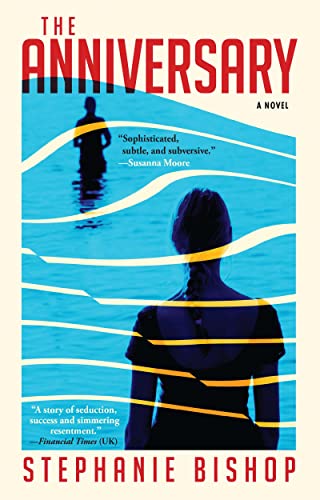
I began reading Stephanie Bishop‘s novel, The Anniversary, today. The Anniversary is a brilliantly written novel with a gripping and fast-paced storyline. It poses some interesting questions: how blurred is the boundary between reality and fiction in a writer’s thoughts? How can we reject those we yearn for? And what are the consequences for ourselves, others, and our creativity if we don’t?
J.B. Blackwood, a novelist, is on a cruise with her husband, Patrick, to celebrate their wedding anniversary. Her husband is much older than her and was her former professor, film director, and cult figure. When they first met, he appeared ageless, like a god in the eyes of those who worship them. However, his success is dwindling, while J.B. is on the verge of winning a major literary prize. Previously, her husband always oversaw her art, but now it may overshadow him.
As they sail in the sun for days, with only dark water surrounding them, a storm unexpectedly strikes, and Patrick falls from the ship. J.B. is left alone, and the search for the truth about their marriage and what happened to Patrick begins.
The Anniversary is highly recommended for readers who enjoy Lisa Halliday and Susan Choi’s works. The story revolves around a talented writer who has to confront the unresolved death of her spouse and find the courage to stand on her own. It is a captivating page-turner that will keep you hooked till the end.
The Jan Lilien Education Fund sponsors ongoing sustainability and environmental awareness programs. Gifts made this month; I will match dollar-for-dollar. All donations are tax-deductible.
I receive a commission when you buy a book or product using a link on this page. Thank you for supporting Sharing Jan’s Love blog.
by Percival Everett
I started reading “James: A Novel” by Percival Everett, my fiftieth book this year. After reading only a few pages, I knew I had selected the perfect novel. The story revolves around an enslaved man named Jim who overhears that he is about to be sold to a man in New Orleans, separating him from his wife and daughter forever. In response, he decides to hide on nearby Jackson Island while formulating a plan.
Simultaneously, we encounter Huck Finn, who has staged his death to flee his abusive father and has recently resurfaced in town. The narrative unfolds as they embark on a perilous journey, navigating the Mississippi River on a raft. Each turn brings floods, storms, and unexpected encounters, including a run-in with the Duke and Dauphin.
While the familiar elements of ‘Adventures of Huckleberry Finn‘ are present, ‘James: A Novel‘ offers a unique perspective. It illuminates Jim’s agency, intelligence, and compassion, challenging our preconceived notions and offering a fresh take on a classic narrative.
‘James: A Novel‘ is not just a book; it’s a cornerstone of twenty-first-century American literature. It’s a testament to Everett’s literary prowess, solidifying his status as a true icon in the literary world.
When you purchase a book through one of my links, I earn a small commission that helps support my passion for reading. This contribution allows me to buy even more books to share with you, creating an incredible cycle of discovering great reads together! Your support truly makes a difference!
by Gabrielle Zevin
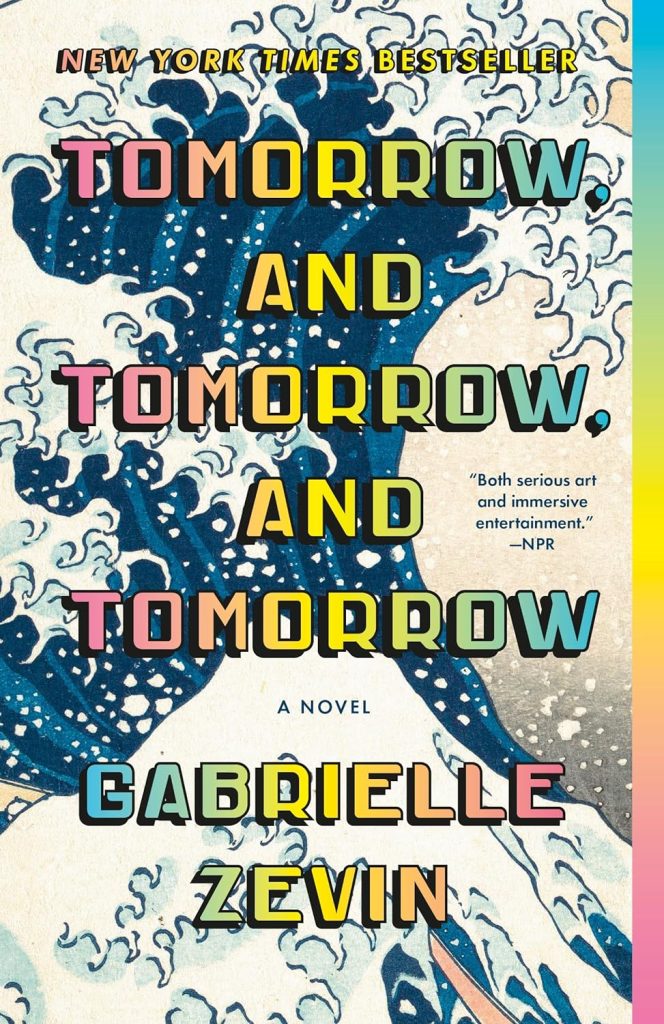
I delved into the pages of “Tomorrow, and Tomorrow, and Tomorrow: A Novel” by Gabrielle Zevin. The narrative unfolds the lives of Sam and Sadie, two college friends who evolve into creative partners in video game design. Their journey is a tapestry of fame, joy, tragedy, duplicity, and a form of immortality, all woven into a unique love story that captivated me like no other.
This love story uniquely portrays the challenges and triumphs of a relationship in the context of their shared creative endeavors.
On a bitter-cold day in December of his junior year at Harvard, Sam Masur exits a subway car and sees Sadie Green amid the hordes of people waiting on the platform. He calls her name. For a moment, she pretends she hasn’t heard him, but then, she turns, and a game begins: a legendary collaboration that will launch them to stardom.
These friends, who have been close since childhood, take bold steps, borrow money, and seek favors. Even before they graduate from college, they have birthed their first blockbuster, Ichigo. In a blink, the world is at their feet. Sam and Sadie, not yet twenty-five, are shining with brilliance, success, and wealth. But these attributes can’t shield them from their emotional rollercoaster of creative aspirations and the heartbreaks that come with it.
Spanning thirty years, from Cambridge, Massachusetts, to Venice Beach, California, and lands in between and far beyond, Gabrielle Zevin‘s Tomorrow, Tomorrow, and Tomorrow provides a profound exploration of the diverse nature of identity, disability, failure, the redemptive possibilities in play, and above all, our deep-seated need to connect: to be loved and to love. It’s a journey that will make you reflect on your life and relationships.
When you purchase a book through one of my links, I earn a small commission that helps support my passion for reading. This contribution allows me to buy even more books to share with you, creating an incredible cycle of discovering great reads together! Your support truly makes a difference!
by Margaret Atwood
Bodily Harm by Margaret Atwood is one of the books I picked up from our bookshelf in the first few months after Jan’s death. Being someone who has always fantasized about being a journalist, I found it very interesting.
A powerfully and brilliantly crafted novel, Bodily Harm is the story of Rennie Wilford, a young journalist whose life has begun to shatter around the edges. Rennie flies to the Caribbean to recuperate, and on the tiny island of St. Antoine she is confronted by a world where her rules for survival no longer apply. By turns comic, satiric, relentless, and terrifying, Margaret Atwood’s Bodily Harm is ultimately an exploration of the lust for power, both sexual and political, and the need for compassion that goes beyond what we ordinarily mean by love.
Bodily Harm may be the bleakest book that Ms. Atwood has written. One of her common themes is “the violence that human beings inflict on one another and their isolation in an uncaring world. It holds out some hope in the form of compassion to be shared by those who are victims of bodily harm in any form. The novel suggests that every person falls into this category. All are victims. There is no exemption, no escape for anyone.”
I recommend this book.
by Mark Haddon
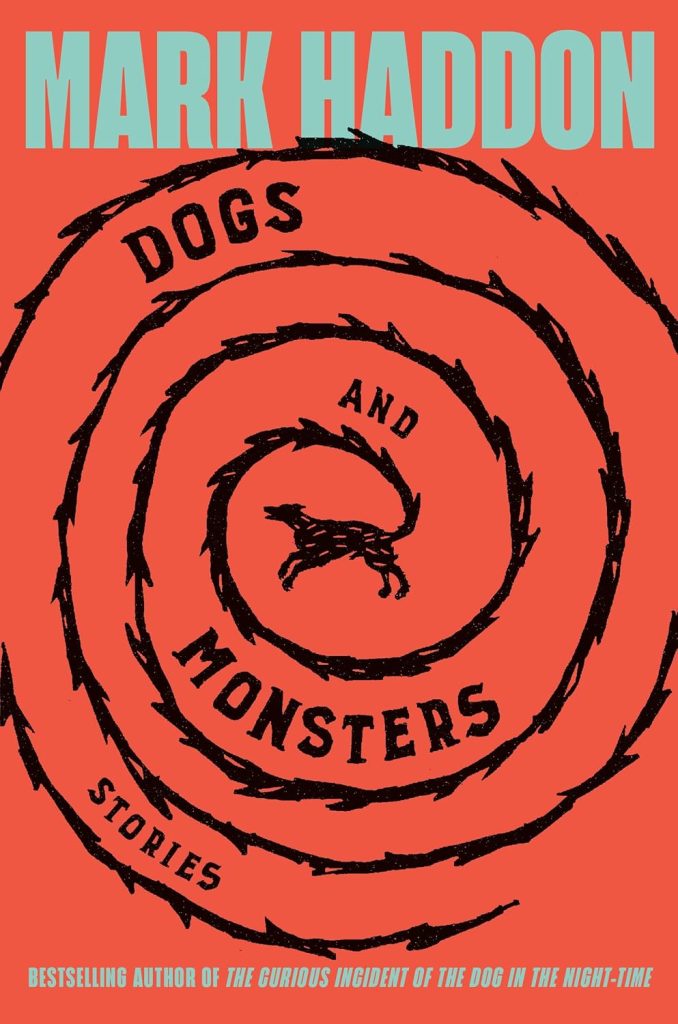
Today, I started reading Dogs and Monsters: Stories by Mark Haddon. The collection features eight captivating and imaginative stories that blend Greek myths with contemporary dystopian narratives. The stories explore themes of mortality, moral choices, and various forms of love, including romantic, familial, and self-love. Haddon’s clear-eyed vision is infused with deep empathy.
In addition, Haddon’s fluid prose showcases his remarkable powers of observation, both of the physical world and the inner workings of the human psyche. Greek myths have fascinated people for millennia with their timeless appeal and enduring lessons about fate, hubris, and life’s uncertainties. In Dogs and Monsters: Stories, Mark Haddon delves into the heart of these ancient fables and presents them in a fresh light. For instance, in one story, the dawn goddess Eos requests that Zeus grant her lover Tithonus eternal life but forgets to ask for eternal youth. In “The Quiet Limit of the World,” Haddon imagines Tithonus’s life as he ages over thousands of years, transforming this cautionary tale about tempting the gods into a spellbinding meditation on observing death from the outside. This tale ultimately explores how carnal love evolves into something more profound and poignant over time.
In “The Mother‘s Story,” Haddon reinterprets the myth of the Minotaur, born of the monstrous lust of King Minos’s wife, Pasiphaë. He turns it into a heartbreaking parable of a mother’s love for a damaged child and the more tangible monstrosities of patriarchy. In “D.O.G.Z.,” the story of Actaeon, who was transformed into a stag after glimpsing the naked goddess Diana and was subsequently torn apart by his hunting dogs, becomes a visceral metaphor for the continuum of human and animal behavior.
Other stories in Dogs and Monsters: Stories play with contemporary mythic tropes—such as genetic engineering, attempts to escape the future, and the cruelty of adolescent ostracism. These stories showcase how modern humans are subject to the same capriciousness that concerned the Greeks but in a fresh and intriguing light. Haddon‘s tales cover a wide range of themes, from the mythic to the domestic, from ancient Greece to the present day, and explore love alongside stories of cruelty. They take readers from battlefields to bed and breakfasts and from dogs in space to doors between worlds, all bound together by profound sympathy and an insight into how human beings think, feel, and act when pushed to their limits.