
Garden12
Estimated reading time: 0 minutes, 0 seconds
Subscribe to Sharing Jan's Love Newsletter!
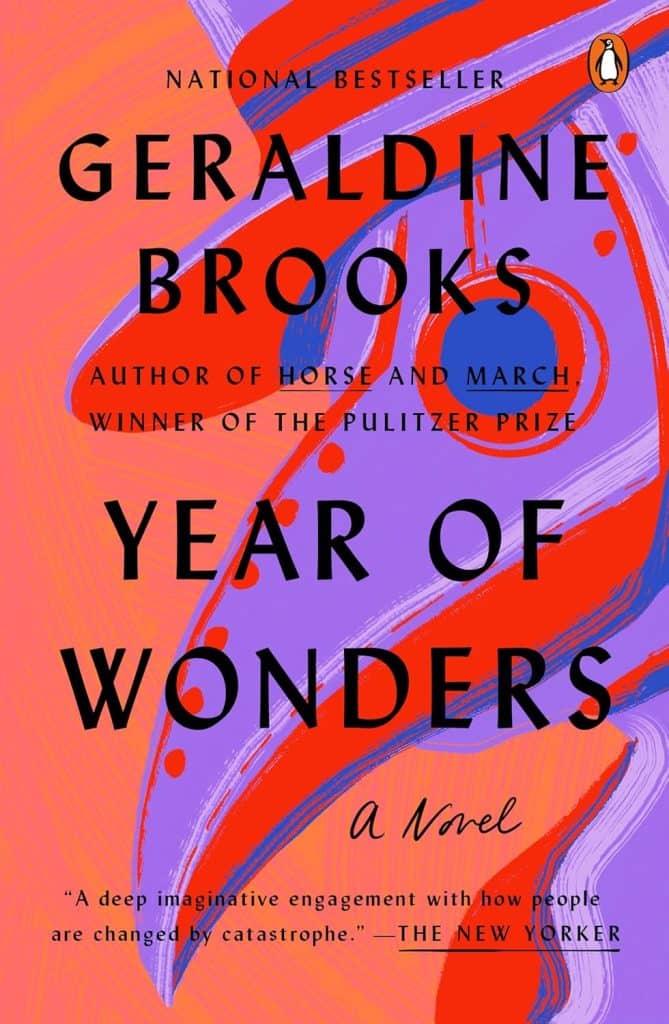
by Geraldine Brooks
I started reading “Year of Wonders: A Novel” by Geraldine Brooks today. It is a compelling story set in 17th-century England about a village that quarantines itself to stop the spread of the plague. The book is written by the author of “The Secret Chord” and “March,” both of which won the Pulitzer Prize. Inspired by the events in Eyam, a village in the rugged hill country of England, “Year of Wonders” offers a richly detailed portrayal of a significant historical moment.
The plot begins when an infected bolt of cloth arrives from London, bringing the plague to an isolated village. A housemaid named Anna Frith emerges as an unlikely heroine and healer. Through Anna’s perspective, we experience the fateful year of 1666 as she and her fellow villagers confront the outbreak of disease and the rise of superstition. As death visits each household and villagers turn from prayer to fear-driven witch-hunting, Anna must find the strength to face the breakdown of her community and the temptations of forbidden love. Her struggle for survival and growth transforms a disastrous year into an extraordinary “year of wonders.
Written with remarkable emotional depth, the novel introduces, according to The Wall Street Journal, “an inspiring heroine” and skillfully weaves themes of love and learning, loss and renewal into a captivating and unforgettable narrative.
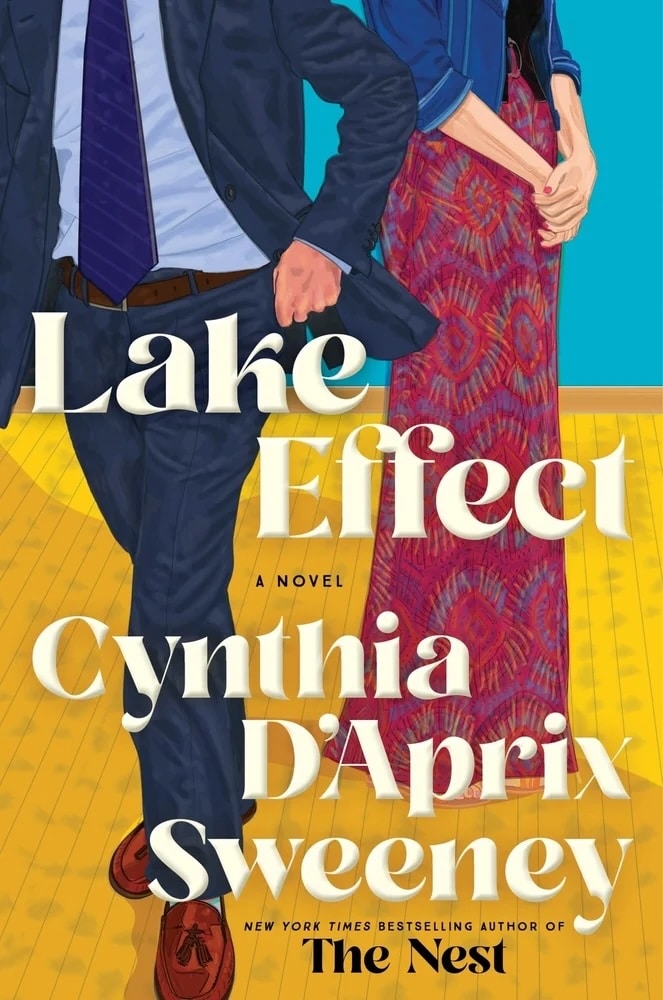
by Cynthia D'Aprix Sweeney
Cynthia D’Aprix Sweeney‘s Lake Effect is a wry and tender portrait of two families forever changed by one impulsive decision that will reverberate for decades. Written with Cynthia D’Aprix Sweeney‘s signature humor and insight, Lake Effect offers a wise and probing exploration of love and desire, the relationships between mothers and daughters, loss and grief, and what we owe to the people we love most.
It’s 1977, and an air of restlessness hangs over the residents of Cambridge Road in Rochester, New York—a community long influenced by the booming fortunes of Kodak and Xerox, and for some, the traditions of the Catholic church. When Nina Larkin receives a copy of *The Joy of Sex* from her newly divorced friend, she can no longer ignore the lack of intimacy in her marriage.
Just as her oldest child, Clara, is experiencing her first love, Nina finds herself yearning for something forbidden: a midlife awakening. An intoxicating affair with a prominent neighbor introduces Nina to a freedom she never thought possible. Still, it also jeopardizes the reputations of both families and upends Clara’s world as she stands on the brink of adulthood.
Years later, Clara, now a successful food stylist in New York City, has never fully escaped the shadow of the childhood scandal. Drawn back home by the pull of a family wedding and grappling with her own challenges, she makes a pivotal decision that turns her life upside down.
Cynthia D’Aprix Sweeney is the author of the bestselling novels “The Nest,” which became an instant New York Times bestseller and was named one of the best books of the year by People, the Washington Post, and NPR, as well as “Good Company,” a selection for Read with Jenna. She has appeared as a guest on shows like Today, Late Night with Seth Meyers, and NPR’s All Things Considered. Her works have been translated into more than twenty-eight languages, and “The Nest” is currently in development as a limited series with AMC Studios.
Ms. Sweeney holds an MFA from the Bennington Writing Seminars and lives in New York City with her husband.
Discover your next favorite book and dive into a world of curated, exciting reads by purchasing through my links. You’ll have access to a diverse selection of books I’ve personally vetted for quality and enjoyment. Additionally, by supporting these selections, you’ll help me continue to provide you with more personalized recommendations. I earn a small commission from your purchase, which allows me to buy and share even more books with you. Your support truly makes a difference!
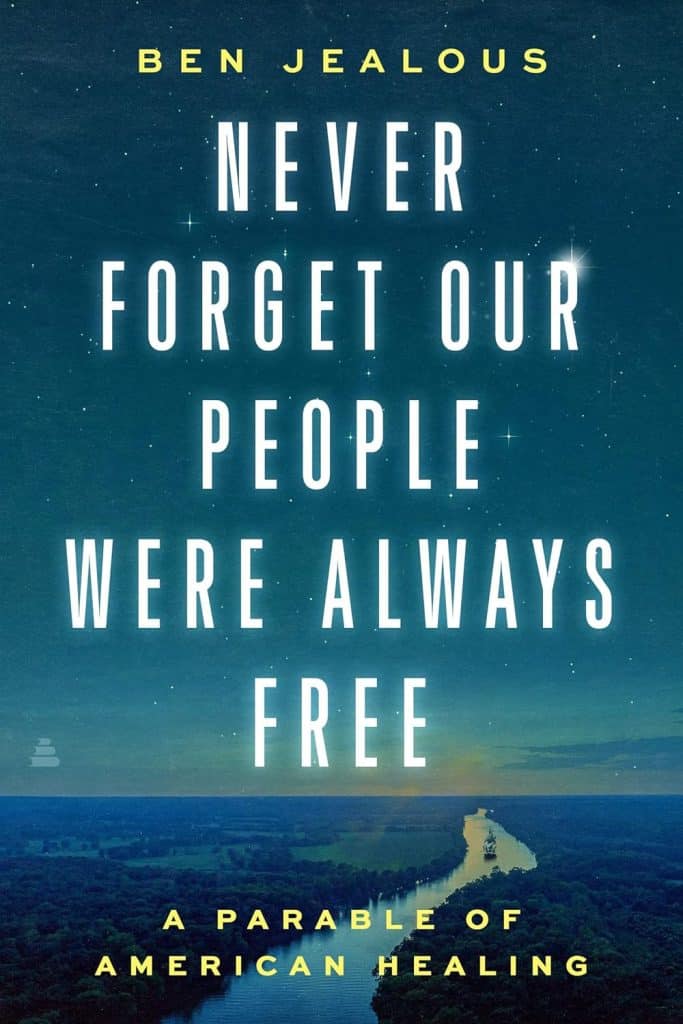
by Ben Jealous
Today, I started reading “Never Forget Our People Were Always Free: A Parable of American Healing” by Ben Jealous, the Executive Director of the Sierra Club. The book highlights how the path to healing America’s broken heart begins with each of us having the courage to heal ourselves. According to Mr. Jealous, it would be transformative if every American treated each other as cousins.
Ben Jealous is the son of parents who had to leave Maryland because their cross-racial marriage was illegal.
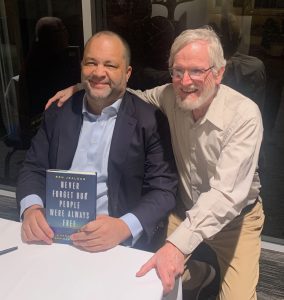
I briefly met Ben Jealous last May when I went to Washington with the Religious Action Center of Reform Judaism‘s Day of Action. When I saw Mr. Jealous speaking at Temple Emanu-El in neighboring Westfield, I immediately signed up to attend in person. He is an inspiration as an advocate for the environment, civil rights, and the healing of America’s broken heart.
His lively, courageous, and empathetic storytelling calls on every American to look past deeply cut divisions and recognize that we are all in the same boat now. Along the way, Jealous grapples with hidden American mysteries, including:
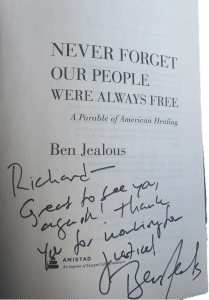 The book Never Forget Our People Were Always Free is told through parables. It features intimate glimpses of political and faith leaders such as Jack Kemp, Stacey Abrams, and the late Archbishop Desmond Tutu. The book also highlights unlikely heroes such as a retired constable, a female pirate from Madagascar, a long-lost Irishman, a death row inmate, and a man with a Confederate flag over his heart.
Never Forget Our People Were Always Free offers readers hope that America’s oldest wounds can heal and her oldest divisions can be overcome.
Although I have only read a handful of pages of the book, I highly recommend it!
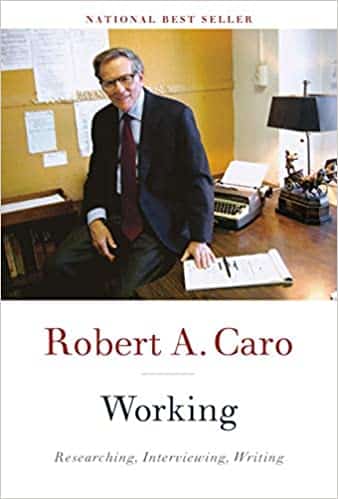
by Robert A. Caro
Working by Robert A. Caro is a book of evocatively written essays on his life and work. Among the many valuable words of wisdom is his case that one needs to look at every piece of information, not just what we know when we begin. Far too often, people jump to conclusions without having learned all of the facts.
He describes what it was like to interview the mighty Robert Moses and to begin discovering the extent of the political power Moses wielded; the combination of discouragement and exhilaration he felt confronting the vast holdings of the Lyndon B. Johnson Library in Austin, Texas; his encounters with witnesses, including longtime residents wrenchingly displaced by the construction of Moses’ Cross-Bronx Expressway and Lady Bird Johnson acknowledging the beauty and influence of one of LBJ‘s mistresses. He gratefully remembers how, after years of working in solitude, he found a writers’ community at the New York Public Library, and details the ways he goes about planning and composing his books.
Caro recalls the moments at which he came to understand that he wanted to write not just about the men who wielded power but about the people and the politics that were shaped by that power. And he talks about the importance to him of the writing itself, of how he tries to infuse it with a sense of place and mood to bring characters and situations to life on the page. Taken together, these reminiscences–some previously published, some written expressly for this book–bring into focus the passion, the wry self-deprecation, and the integrity with which this brilliant historian has always approached his work.
I found this one of the best books I have read and recommend it to all readers.
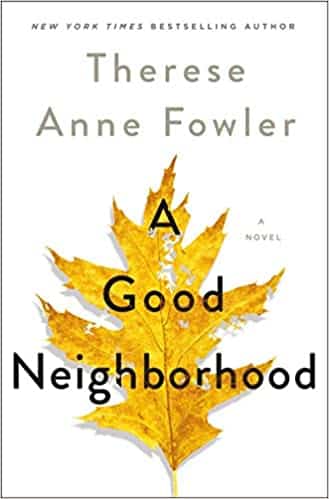
by Therese Anne Fowler
A Good Neighborhood by Therese Anne Fowler is a book that was difficult to put down once I started it. A Good Neighborhood is a “gripping contemporary novel that examines the American dream through the lens of two families living side by side in an idyllic neighborhood, throughout one summer that changes their lives irrevocably.”
I selected the book as it focuses, among other issues, on gentrification and environmental degradation. But to say that is what it is about would be a disservice. It also includes a full range of the social issues of our time.
But with little in common except a property line, these two very different families quickly find themselves at odds: first, over an historic oak tree in Valerie’s yard, and soon after, the blossoming romance between their two teenagers. Told from multiple points of view, A Good Neighborhood asks big questions about life in America today ― what does it mean to be a good neighbor? How do we live alongside each other when we don’t see eye to eye? ― as it explores the effects of class, race, and heartrending star-crossed love in a story that’s as provocative as it is powerful.
Ms. Fowler narrates the book. Greek Chorus. By doing this, she ensures that we are part of the story as much as readers.
We need to find answers to the big questions if we are to be good neighbors.
The effects of class, race, and heartrending star-crossed love make this a must-read book.
I recommend the book to all readers.
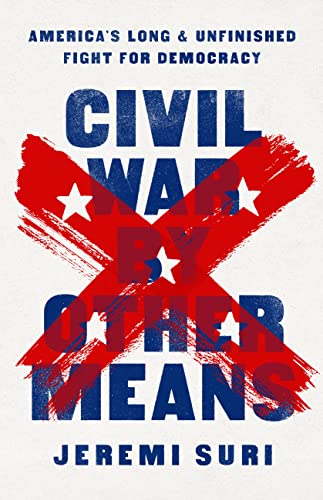
by Jeremi Suri
Civil War by Other Means: America’s Long and Unfinished Fight for Democracy by Jeremi Suri is the perfect book to help us understand our failures at creating a multi-racial democracy in the nineteenth century and how this has weakened and divided our nation. Jeremi Suri chronicles the events after the civil war, from Lincoln’s assassination to Garfield’s, and how they were a continuation of the war by other means.
I purchased a signed copy and watched a video presentation by Dr. Suri due to my membership at One Day University. Civil War by Other Means is a vivid and unsettling portrait of a country striving to rebuild itself but unable to compromise on or adhere to the most basic democratic tenets.
I highly recommend Civil War by Other Means: America’s Long and Unfinished Fight for Democracy by Jeremi Suri.
In addition, the documentary, on Apple TV+, Lowndes County and the Road to Black Power is a companion piece that illustrates the continued failure to create a multi-racial democracy. Jeremi Suri makes a convincing case that the eternal struggle for democracy continues in our time.
The Goodreads summary provides an overview,
In 1865, the Confederacy was comprehensively defeated, its economy shattered, its leaders in exile or in jail. Yet in the years that followed, Lincoln’s vision of a genuinely united country never took root. Apart from a few brief months, when the presence of the Union army in the South proved liberating for newly freed Black Americans, the military victory was squandered. Old white supremacist efforts returned, more ferocious than before.
In Civil War by Other Means, Jeremi Suri shows how resistance to a more equal Union began immediately. From the first postwar riots to the return of Confederate exiles, to the impeachment of Andrew Johnson, to the highly contested and consequential election of 1876, Suri explores the conflicts and questions Americans wrestled with as competing visions of democracy, race, and freedom came to a vicious breaking point.
What emerges is a vivid and, at times, unsettling portrait of a country striving to rebuild itself but unable to compromise on or adhere to the most basic democratic tenets. What should have been a moment of national renewal was ultimately wasted, with reverberations still felt today. The recent shocks to American democracy are rooted in this forgotten, urgent history.
The Jan Lilien Education Fund sponsors ongoing sustainability and environmental awareness programs. Gifts made this month; I will match dollar-for-dollar. All donations are tax-deductible.
I receive a commission when you buy a book or product using a link on this page. Thank you for supporting Sharing Jan’s Love blog.